The World Energy Council has announced its fifth annual ranking of energy and climate policies.
It found that only two countries out of 130 are achieving a ‘AAA’ score, Switzerland and Sweden based on three areas assessed as part of the energy trilemma.
The report found Europe has set the global benchmark by setting ambitious GHG reduction targets.
But two new countries were added to the negative watch list, which in 2014 included Germany, Italy, Japan and the UK. South Africa was added because of its electricity crisis and the US was added because of creaking infrastructure, lack of investment and vulnerability to extreme weather events.
The UK remains in the top ten but saw its grading for energy equity downgraded from ‘AAA’ to ‘AAB’. The report said this reflected the global trade-off between the trilemma goals and the cost of changing energy systems.
Chair of the study, Joan MacNaughton said: “A combination of continued deindustrialisation, greater energy efficiency and the use of more renewable energy have allowed many countries of the European Union to decouple economic growth and GHG emissions.
“Our research underlines how priorities vary from country to country – though energy security is key for all.”
Macnaughton said the report highlights how to translate objectives for national contributions into national level actions for energy, something that will be discussed in Paris later this month as part of the 21st Conference of the Parties.
The report will also be used as a starting point for discussions at the World Energy Congress to be held in October 2016 in Istanbul.
MacNaughton added, “For countries to move up in the rankings and remain ahead of the pack, they must adopt prudent, forward-looking energy policies to meet decarbonisation goals and maintain competitiveness.
“This report provides a map for the long road from Paris to help policymakers and businesses chart a sustainable course.”
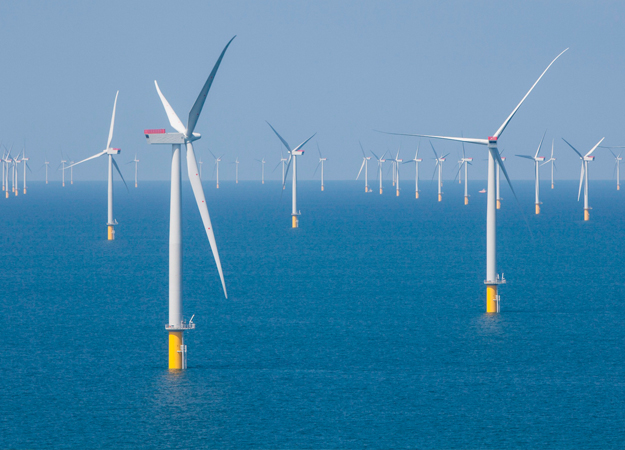
Image: Offshore wind farm (Scottish Power)
UK loses AAA energy rating
World Energy Council downgrades UK on cost of changing energy systems
 By EBS