


New modelling by Energy Systems Catapult has identified credible pathways for the UK’s transition to net zero by 2050 through accelerated deployment of clean technology.
The Innovating to Net Zero 2024 report modelled four least-cost future scenarios for achieving Net Zero in 2050, identifying innovation priorities and low-regret deployment choices for industry and government.
The analysis reveals that while there remains significant uncertainty about the pathway to a future energy system, the options are narrowing.
Accelerating the deployment of key mature technologies such as offshore wind and solar, large-scale nuclear, and the electrification of heating, at an even faster rate is essential to propel the UK to a net zero future.
This should be delivered in parallel to an accelerated programme of innovation in novel technologies such as small modular reactors (SMRs), long duration energy storage, and bioenergy with carbon capture and storage (BECCS).
These high-potential, but less mature technologies, offer the UK’s clean tech innovators an opportunity to capture the high value parts of the international supply chain.
Analysis from the Innovating to net zero 2024 report demonstrates that the cost of meeting net zero is still within 1% of GDP by 2050.
This includes £16bn per year in capital investment from the public and private sectors, part of £600bn in total system costs over the next 25 years.
Deploying clean technologies at pace and scale on its own will not be enough.
The Innovating to Net Zero 2024 report sets out that integrating all these technologies into a reliable, clean energy system is also a huge innovation challenge.
An effective Net Zero energy system will require an integrated design across different vectors (hydrogen, gas, electricity etc) and technologies in a way that allows them to work effectively together whilst ensuring security of supply and low costs.
Decarbonising the UK’s energy system will depend in large part on electrification, with final energy consumption across all scenarios ranging from 525TWh/yr to 619TWh/yr by 2050.
This is double the size of the power system in 2024.
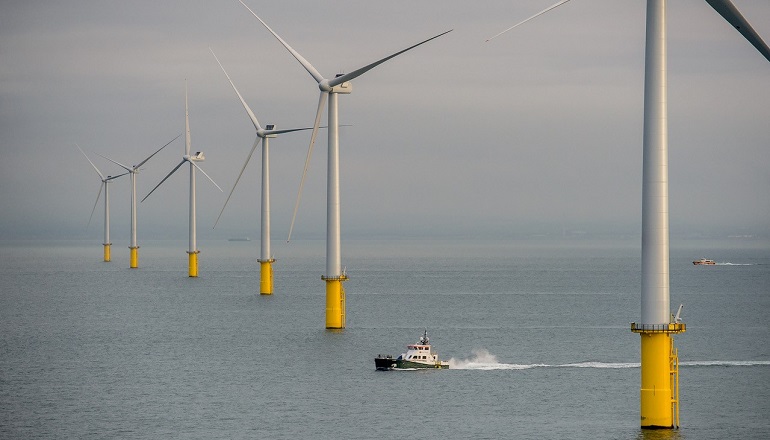
There will be a key role for offshore wind generation with between 33GW and 76GW installed, providing up to 53% of all UK electricity production by 2050.
Solar provides up to 11% of all UK electricity production with between 19GW and 70GW installed.
With between 23GW and 31GW installed, nuclear power generation will remain a crucial contributor to UK electricity production in all energy system designs.
Guy Newey, Chief Executive Officer at Energy Systems Catapult, said: “If we fail to take consumers along the journey with us, Net Zero will not happen.
“We do not know for certain what combination of technologies will get us to Net Zero in 2050, but our new modelling provides us with cause for optimism.
“We can meet our targets in a way that delivers for consumers and unlocks economic opportunities for innovators.
“The UK plays host to some of the world’s most exciting innovators and we are confident they will seize that opportunity.”