


Vattenfall has pledged to halve emissions from its supply chain by 2030.
The move is one of several measures taken to tighten climate management in order to be able to reach zero net emissions by 2040.
Vattenfall said its strategy of enabling fossil free living within one generation has a full value-chain perspective.
This means that Vattenfall not only works purposefully to reduce its own footprint, but also the footprint of suppliers and customers.
As an important step towards a fossil free future, Vattenfall has for 2030 set an intensity target of 50% on supply chain emissions from goods and services, covering all supplier tiers.
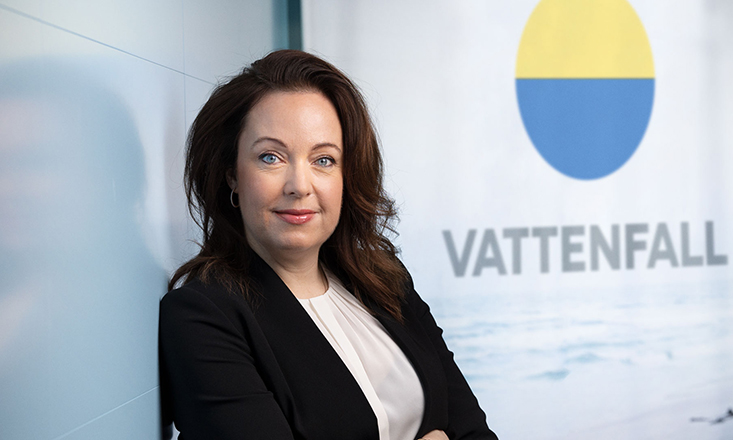
Vattenfall president and chief executive Anna Borg (pictured) said: “Along with the great progress we have made in the last few years with regards to decarbonising our own operations, the relative impact from our supply chain is growing.
“With Vattenfall’s target on reducing the climate impact from purchased goods and services with 50% until 2030, our CO2 strategy becomes complete and we send a clear signal that sustainability is our business.
“We believe that through making climate-smart decisions when we procure and through cooperating with our suppliers, we can both lower our own emissions and push for a wider decarbonisation in society.”
Today, the main emission drivers in Vattenfall’s supply chain are extraction and production of raw materials, such as concrete, steel and other metals.
Transportation in the supply chain also stands for a significant share of the emissions.
Vattenfall aimed to reduce the overall environmental impact of the recent construction phase of the onshore wind farm Nieuwe Hemweg in the Netherlands which was completed in 2021.
In order to compare suppliers objectively on sustainability and create incentives for them to reduce their carbon footprint, Vattenfall included the use of the Environmental Cost Indicator (ECI) in its procurement process.
The ECI is a method based on Life Cycle Assessment, which combines a range of environmental impacts of a project and calculates the cost to mitigate.
Vattenfall calculated a reference ECI value, and suppliers were asked to describe how they would reduce this ECI value using their design, machinery, transport, work and material improvements.
Suppliers with a high expected reduction in the ECI received a discount on their offered price, thereby receiving an advantage in the supplier selection process.
The method resulted in a significant GHG emission reduction of 25% compared to business-as-usual, against similar costs.
Vattenfall is currently developing and testing sustainability award criteria in other countries to work on a sustainable supply chain together with its suppliers.
Chief financial officer Kerstin Ahlfont said: “Vattenfall works towards the decarbonisation target together with suppliers to make climate-smart decisions in the procurement process.
“For example, this includes climate metrics and awarding schemes in selected tenders, investigations of alternative solutions with lower CO2 footprint and optimization of resource use, and push for electrification of production processes.”