


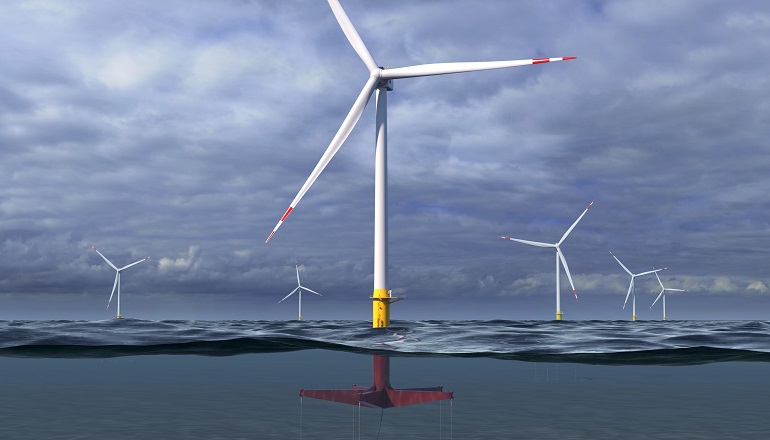
GE is partnering with Glosten, the developer of the PelaStar tension-leg platform floating wind turbine foundation, as part of an ongoing US research project funded by ARPA-E.
The companies are working together as part of the $4m project, supported through the Aerodynamic Turbines Lighter and Afloat with Nautical Technologies and Integrated Servo-control (ATLANTIS) programme, to design and develop controls to support a 12MW floating offshore wind turbine.
Rogier Blom, the project’s principal investigator, said: “Designing a floating turbine is like putting a bus on a tall pole, making it float and then stabilising it while it interacts with wind and waves. Doing this well is both a design and controls challenge.
“Through our ATLANTIS project with ARPA-E, we will be concurrently designing the controls system with the design of the floating structure itself to advance Floating Offshore Wind Energy toward becoming a future commercially viable solution.”
By coupling a 12MW GE turbine with Glosten’s tension leg platform technology, the team has taken on the challenge of designing a light-weight floating turbine with up to 35% less mass in the tower and the floating platform.
GE said this is expected to result in a “very significant reduction of the resulting levelised cost of energy of the electricity generated with this turbine”.
The core principle that makes this possible is co-designing the controls system with the tower and floating platform.