


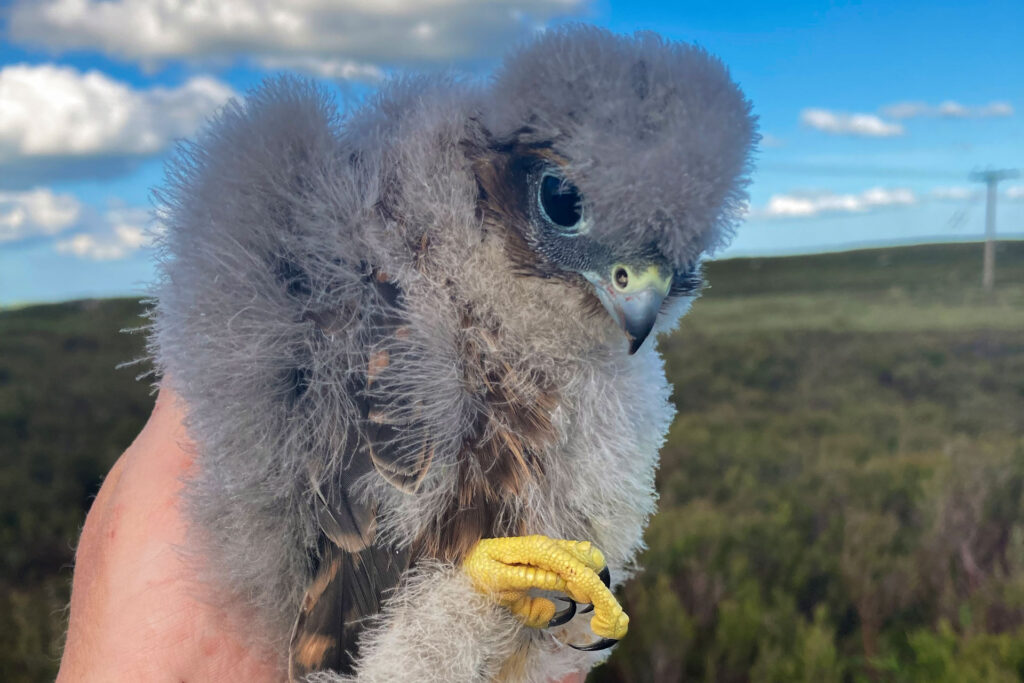
Vattenfall’s Ray wind farm in north-eastern England has become a successful breeding habitat for Britain’s smallest bird of prey, the merlin (pictured).
The merlin has suffered a decline in the past, with an estimated population of around 1,000 pairs in the UK.
In 2015 it was alarmingly added to the UK Red List of Birds of Conservation Concern.
Since 2017, when the 16 turbine Ray wind farm was inaugurated, 23 merlin chicks have fledged here, making the wind farm area one of the best in the region for merlin, according to Paul Galloway from Northumbria Ringing Group, which monitor bird populations in the area.
Galloway said: “Merlins have attempted to breed on Ray wind farm every year since 2017, and with fledged young birds recorded in all but one of those years it is one of our most successful sites.
“We are particularly grateful to Vattenfall, along with other like-minded landowners, for their collaboration and ongoing support with monitoring efforts.”
Vattenfall, which owns and operates Ray Wind Farm, has worked closely with key bodies during the construction and operation of the wind farm to protect the environment.
As part of the Habitat Management Plan, improvement works were undertaken to restore sensitive habitats such as blanket bog by re-wetting the surrounding area.
Works are also being undertaken to encourage the regrowth of heather, improving biodiversity overall including the population of insects – a food source for a number of birds of conservation concern in the local region.
Measures are also put in place each year to minimise disturbance of the nesting merlins, the developer added.
This year, the efforts have contributed to five new merlin leaving their nest.
Vattenfall environmental specialist Robin Cox said: “It’s really great to see another five merlin chicks fledged at Ray this year.
“It is hoped that our ongoing collaboration with the Northumbria Ringing Group will continue to see this trend of successful breeding attempts by merlin as well as other upland species such as curlew and golden plover.”