


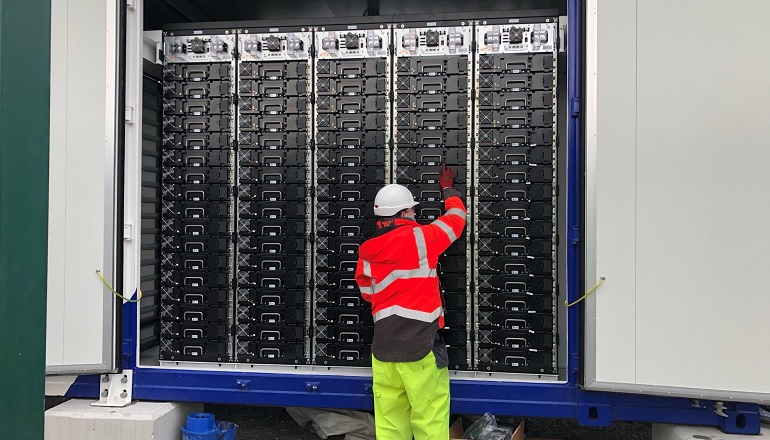
Statkraft’s Kilathmoy and Kelwin-2 battery storage projects, stepped up to support Ireland’s electricity grid on 4 May when a long under-frequency event occurred.
It was the longest under-frequency event on the Irish grid in years based on Statkraft’s data.
The grid dropped below normal operating range (49.9Hz- 50.1Hz) around 8pm and stayed there for about 14 minutes.
Data captured from Statkraft’s newest battery, Kelwin-2, shows that it provided its initial response to the event in just 180 milliseconds, with its Kilathmoy battery delivering a similar response.
Kelwin-2 is rated for 26.6MW and in its current operational mode is set to trigger for under-frequency events below 49.8Hz and to respond in a dynamic fashion, when the active power export is varied dynamically in proportion to the change in frequency, for instance.
Most of the time the battery sits in standby watching the frequency.
As soon as it “sees” the frequency drop below the trigger level, the battery responds automatically, injecting active power to support the grid and stabilise the system.
Statkraft stated: “Whatever the cause of this extended event, one thing is clear.
“Battery projects like Kelwin-2 and Kilathmoy will provide reliable, ultra-fast active power reserves to stabilise the grid when needed.
“That is why they are a key part of the puzzle in allowing high levels of renewable energy to operate on our electricity grid as we drive towards a 70% renewable electricity target for 2030.”
Kelwin-2 just went live on 1 April this year, just one year after Kilathmoy, the first grid-scale battery in Ireland.