


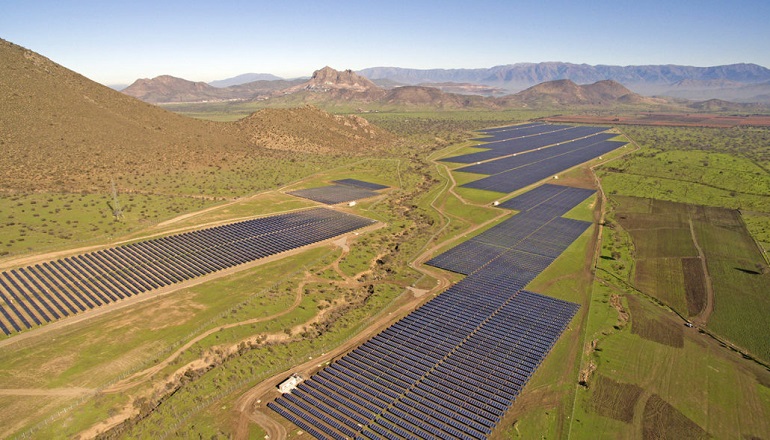
Atlas Renewable Energy has started commercial operation of the 156MW Juazeiro solar farm in Brazil.
The photovoltaic installation, located in Juazeiro, in the state of Bahia, includes the first digital substation installed in Latin America, enhancing the power plant’s reliability.
The total amount invested in the plant is around $165m (€148m).
In 2015, Juazeiro was contracted through a 20-year energy purchase agreement in a government auction.
The PV farm’s digital substation transmits and distributes clean electricity, while increasing the operators’ productivity, safety and reliability.
Compared with a conventional substation, a digital version requires substantially less space, reduces the quantity of copper wire needed, and facilitates more efficient operation of utility networks including monitoring, diagnostics and control.
Atlas chief executive Carlos Barrera said: “Our goal at Atlas Renewable Energy is to lead solar innovation in Latin America and to continue introducing and implementing the most advanced technologies available in the region.
“Atlas continuously looks to the next evolution of this industry, while positioning ourselves as a trusted partner that can deliver the highest standard solar installations.”
Atlas operates 304MW of solar and has an additional 117MW under construction.
In April 2019, the developer began construction of its fourth project, Sertao Solar Barreiras, in the state of Bahia, expected to begin operations in the fourth quarter of 2019.
Barrera also acknowledged the financial support from Banco do Nordeste (BNB), Pactual, Banco ABC Brasil, and Banco Bradesco for accelerating investment in renewable energy projects throughout the country.
“The support from the financial entities has been instrumental; the product of this collaboration is a testament to the role the private sector can play to help support Brazil’s future infrastructure needs,” he added.
As part of its social and environmental commitment, the company donated hundreds of seedlings of the Giant Umbu species, a native plant that can be used as a source of income for the neighbouring communities, which contributes to local biodiversity in Brazil’s north-east region.