


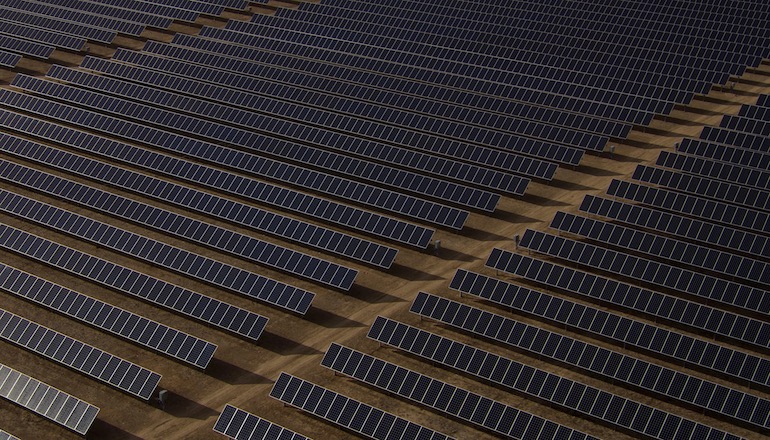
Photovoltaic installations are expected to hit 115GW (direct current) this year, according to Wood Mackenzie’s latest quarterly market outlook, up 5% from the total installed globally in 2019.
In Asia, the Chinese market is continuing its robust recovery and Wood Mackenzie now expects 39GW of installations by the end of 2020.
Of this total, 27GW will be installed in the second half of the year.
The pipelines for both subsidy-free and auctioned projects have “ballooned” in 2020.
The Chinese market will grow by 30% year-on-year despite short-term supply chain disruption delaying module procurement for some developers, Wood Mackenzie found.
Wood Mackenzie solar head Ravi Manghani said: “The most severe of lockdowns have ended in almost all countries, with construction on PV sites able to continue as planned, albeit with many projects facing delays caused by disruption earlier in 2020.
“Year-over-year growth in installations will continue each year to 2025, topping out at 145GW.
“The one exception will be 2024 when the US market will slow following the final stepdown in the ITC schedule.”
In India rising coronavirus cases in India and social distancing measures are likely to slow installation activity in the country for the rest of the year at the very least.
Without policy enforcement, India’s 100GW solar target is unlikely to be met.
Indian PV installations will sit at just 4.9GW in 2020, down 42% on 2019 and the lowest level since 2016, Wood Mackenzie found.
The European Commission’s preference for a 55% decarbonisation target by 2030 is a positive long-term signal to the market in Europe.
To meet this target, Wood Mackenzie estimates that renewable power’s share of EU power supply will need to rise to 65% by 2030, up from 38% in 2020.
The Germany installations are expected to reach almost 4.5 GW in the country, which is the highest level seen since 2012.
In the US, utility-scale timelines have been largely unchanged due to the pandemic.
Permitting and low power prices are developers’ main challenges in Latin America. Wood Mackenzie said it expects the market to continue to grow this year as projects come online despite economic and lockdown-related setbacks.
Increasing project pipelines in Brazil and Chile will be the region’s main growth driver, as political and regulatory uncertainty threaten the Mexican market’s potential.
In the Middle East, the regional storyline remains focused on fierce tariff competition and top-down utility-scale procurements.
In Africa, emerging markets are beginning to shorten project development cycles and reduce pipeline attrition.