


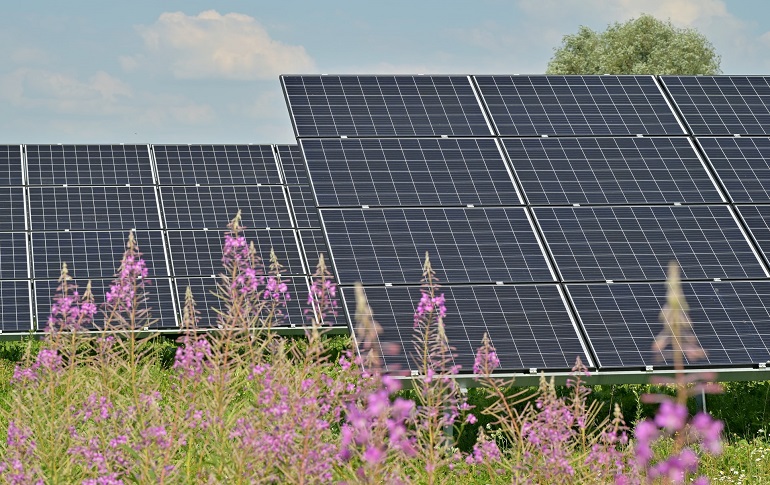
The Secretary of State for the Department for Energy Security and Net Zero (DESNZ) has delayed a decision on a development consent order (DCO) for Canadian Solar and Windel Energy’s proposed 350MW solar project in England.
The Planning Inspectorate, acting on behalf of the secretary of state for what was the Department for Business, Energy and Industrial Strategy, accepted the DCO application for Mallard Pass Solar Farm in late December 2022.
Secretary of State for DESNZ Claire Coutinho issued a statement that she has decided to re-set the statutory deadline for this application to 13 June 2024 to give the department enough time to make a decision.
Mallard Pass Solar Farm Ltd is proposing to construct, operate, maintain and decommission a new solar farm near Essendine, partly situated in South Kesteven, Lincolnshire, and Rutland.
As the project will have a generating capacity of more than 50MW, it is be classified as a Nationally Significant Infrastructure Project and requires a DCO under the Planning Act 2008.
Photovolt Development Partners is in the pre-application phase for its own development in west Oxfordshire and director Mark Owen-Lloyd said: “Green growth risks going nowhere with today’s decision.
“The Secretary of State’s decision to delay the final outcome on Mallard Pass fits a worrying trend following the unprecedented fourth delay to the decision on the Sunnica solar farm last month.
“In a system designed to provide certainty for developers and communities alike, continually kicking these decisions into the long grass without explanation exacerbates real uncertainty for the UK’s renewables sector.
“This not only leaves local residents in the dark, but also sends an extremely damaging signal to industry.
“As with every application, Mallard Pass requires careful scrutiny, but this has now been diligently performed by the Planning Inspectorate and the Secretary of State has received a clear recommendation.
“Delaying this decision puts at risk the UK’s position as a green energy leader, its prospects for future energy security, and its ability to decarbonise the energy supply, all of which will leave communities under threat on a national scale, not just locally.”