


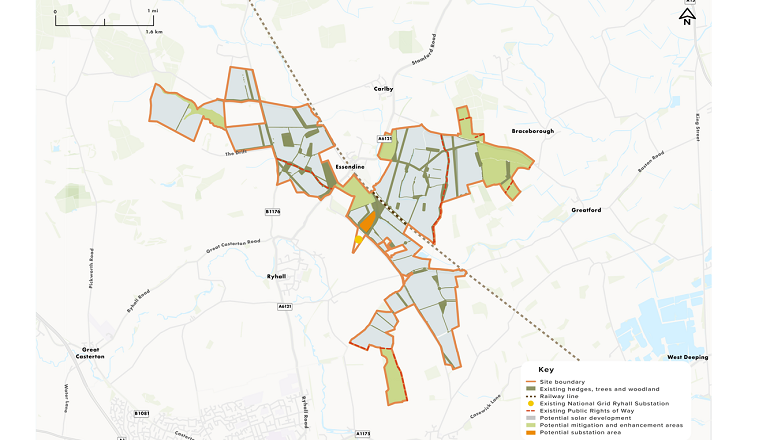
Windel Energy and Canadian Solar have submitted an environmental impact assessment scoping report to England’s Planning Inspectorate for the 350MW Mallard Pass solar project.
The Planning Inspectorate will now consult with key local stakeholders to review this process and provide feedback to ensure it is robust.
As well as reaching a key milestone in the planning process, information has also been published in response to their Stage One consultation, held on early-stage proposals in late 2021.
A project community newsletter has been posted to the approximately 13,000 properties located within the vicinity of the proposed solar farm.
This newsletter summarises the feedback received through Stage One of the public consultation by Mallard Pass Solar Farm and how this is informing the ongoing design refinement process.
In addition to this, responses to Frequently Asked Questions (FAQs) from the Stage One consultation have also been made available on the Mallard Pass Solar Farm website.
Mallard Pass planning lead Sarah Price said: “We are pleased to have received a significant volume of feedback and would like to thank everyone who engaged in our consultation.
“We received over 900 responses to our Stage One proposals.
“This feedback has helped our team to improve our understanding of the local area and the aspects of Mallard Pass that local communities consider most important for us to prioritise as we further develop our proposals.
“We acknowledge there was a high level of initial opposition to our early proposals for Mallard Pass Solar Farm from those who responded.
“This feedback is important as we need to understand the basis for those concerns and to look at how they can be addressed as we refine our proposals.
“We are also exploring how best to incorporate and build on the positive feedback and suggestions we received.
“Our focus is on providing accurate and honest information that builds up an understanding of how Mallard Pass Solar Farm can generate low carbon energy whilst minimising impacts on the local environment and surrounding communities.
“Further engagement with members of the local community, as well as with key organisations and statutory stakeholders, is crucial to this process and we look forward to further keeping our commitment to meaningful and iterative communication throughout.”