


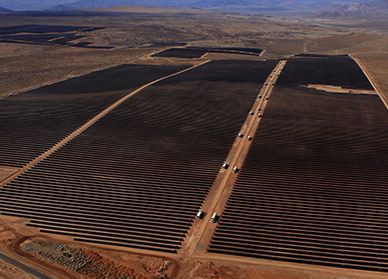
Non-hydro renewable electricity will comprise at least 50% of Chile’s power generation base by 2030, a new report from GlobalData has forecast.
According to ‘Chile Power Market Outlook to 2030, Update 2019 – Market Trends, Regulations, and Competitive Landscape’, in 2018, the share of non-hydro renewable power reached 19% of the power mix.
In the renewable energy mix solar PV accounted for 50.8% and wind 33.8% in 2018, the report found.
Along with renewables, gas-based power capacity in the Latin American country will also increase, albeit at a more modest rate, from 48% of the thermal power capacity in 2018 to 55% by 2030.
Chile is now a net exporter of electricity, and GlobalData’s analysis expects that the increasing share of renewables and gas-based power in the electricity mix will make up for any lost capacity as a result of decommissioning coal-fired power stations over the next 12 years.
GlobalData power industry analysts Piyali Das said: “Thermal power dominated Chile’s power mix in 2018 with a share of 52.7% of the total installed capacity, followed by hydro and renewables with a share of 28.1% and 19.1% respectively.”
Power consumption in Chile increased at a compound annual growth rate of 4.1% between 2010 and 2018 due to increased economic activity.
According to GlobalData’s analysis Chile has also recognised the need for energy storage as a key attribute to provide continuous, sustainable and reliable renewable power and is looking to energy storage technologies, such as batteries, pumped hydro, molten salts and hydrogen as “immediate opportunity” areas.
The country has also implemented transmission expansion plans to help integrate more renewables.
Das added: “The Energy 2050 Roadmap, large-scale energy storage solutions, grid modernisation and the retirement of the fossil fuel plants are the crucial elements expected to drive Chile’s energy transition.
“The country is also extending relations with US to strengthen the infrastructure investment and energy cooperation between the two countries, thus with flexible environmental approvals, several investors would consider investing in its power sector.”