


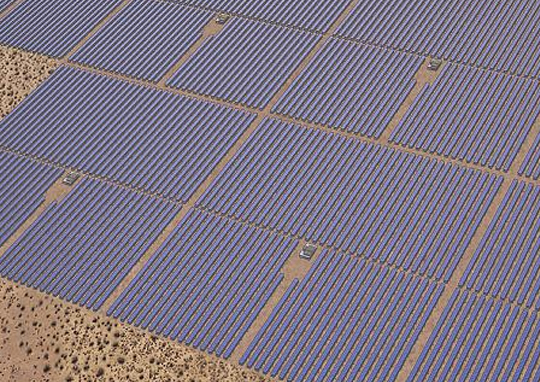
The contribution of renewable power to total installed capacity in the US is expected to double to 30% by 2030 from today, forecasts a GlobalData study.
By 2030 cumulative installed renewables capacity in the US, mainly from solar, onshore and offshore wind, will stand at around 443GW.
Representing a compound annual growth rate (CAGR) of 7.3%, this projection can be attributed to more states adopting and updating renewable energy policies, as well as imposed emission taxes increasing the cost of fossil fuel power generation, according to the analyst outfit.
GlobalData’s latest report, ‘US Power Market Outlook to 2030, Update 2019 – Market Trends, Regulations and Competitive Landscape’ also found that US energy utilities are also in favour of switching to renewable power in order to comply with the state-level renewable energy targets.
The share of coal-based capacity will decline from 27.2% in 2018 to 13.5% in 2030 as it is replaced by renewable energy, storage capacity and stable gas-based generation over the next decade.
GlobalData power industry analyst Arkapal Sil said: “During 2019-2030, offshore wind capacity is set to see the largest growth rate among renewables, reaching 11.7GW from 60MW at a 62% CAGR, while solar photovoltaic capacity is expected to reach 220GW from 75.3GW, growing at a 10% CAGR.”
The onshore wind segment, which registered a growth of 22% CAGR during 2000-2018, to reach 96.3GW, will see a steady growth of 5% CAGR over the forecast period to reach 185.5GW in 2030.
Onshore wind will account for 12% of the overall generation mix in the US compared to 8% in 2018.
Sil added: “Increased renewable capacity addition will open up new markets for wind turbines, modules for solar plants and associated equipment required for transmitting the generated power to the grid.”
Renewable capacity expansion will necessitate grid modernisation in order to manage a high volume of renewable energy with inherent variability.
The report states that this will involve huge investment in grid infrastructure and open up new markets for energy storage to enable a steady supply of power when adequate renewable energy is unavailable.
GlobalData estimates that the battery storage market in the US is expected to reach around $5bn in 2030.
The increased cost of nuclear power due to higher safety standards will result in a slight decline in the nuclear capacity during the forecast period.
“As a result, gas-based power will dominate the generation mix, accounting for 41% of installed capacity, and catering to the country’s base-load power requirement in 2030,” said Sil.