


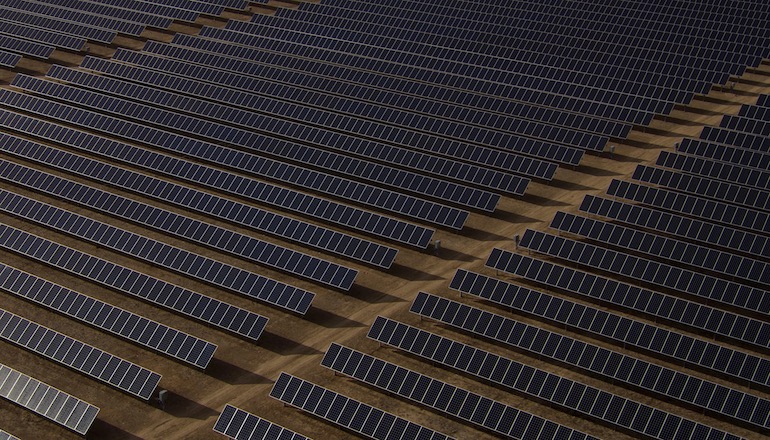
Renewables capacity in the Middle East is set to soar in the coming years, with green energy sources outpacing fossil fuel usage in the power sector by 2040, according to Rystad Energy.
Solar photovoltaic (PV) is expected to emerge as the predominant source, accounting for more than half of the region’s power supply by the middle of the century, up from 2% last year.
By 2050, renewable energy sources, including hydro in addition to solar and wind, are expected to constitute 70% of the Middle East’s power generation mix, up from 5% recorded at the end of 2023.
Rystad Energy said this signals a “transformative shift” in the region’s energy landscape.
Despite the coming surge of clean energy installations, the region will continue to rely heavily on natural gas in the short term, and usage will continue to grow until it peaks around 2030.
Although traditionally an oil and gas powerhouse, the region is shifting its focus to renewables as a response to rapid industrial growth, increasing population and a global drive to reduce carbon emissions.
By 2050, power demand will reach about 2000 terawatt hours (TWh), compared with the 1200TWh, due to strong industrial development, population growth, and the electrification of transport and other sectors.
Battery energy storage is expected to grow significantly in the 2030s, supporting the intermittency of solar and wind energy and aiding in a smooth energy transition.
Because of a relative lack of hydropower potential and low gas prices, the Middle East will continue to use gas-fired electricity as a primary source and eventually as a transitional fuel in the long term.
“The Middle East trails behind in the renewable energy shift, overshadowed by Asia and Africa where renewable power is expected to surpass fossil fuel generation by 2032. Renewable power generation has outpaced fossil fuel usage in Europe since 2019,” said renewables and power analyst at Rystad Energy Nishant Kumar.
He added: “With nearly 40% of its power consumed by a growing residential sector, the Middle East faces surging power demand.
“This, coupled with the need for economic diversification and freshwater through desalination, underscores the urgency for a transition to renewables.
“Additionally, the anticipated rise in electric vehicles in the long term hints at a future spike in energy demand, making the shift towards renewable sources not just necessary but inevitable for the region’s long-term sustainability.”