


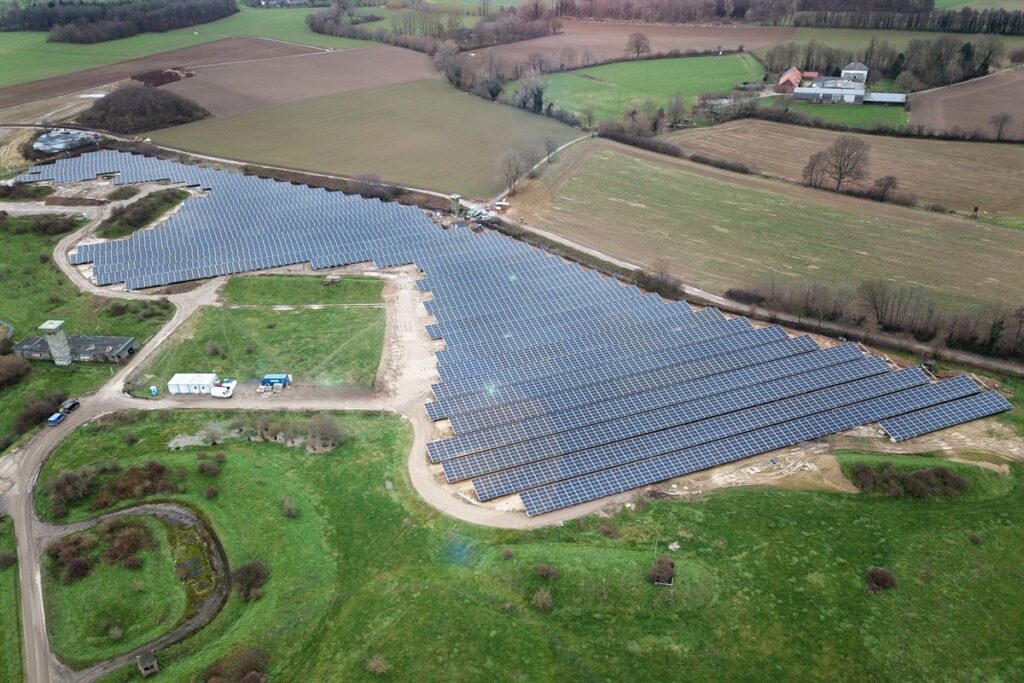
STEAG Energy Solutions (SENS) has built a solar park (pictured) on the site of the former NATO missile base in Xanten, Germany.
Where anti-aircraft missiles equipped with nuclear warheads were stationed under the command or Belgian armed forces until 1989, a solar system now generates around 4.4kWh of green electricity for the Lower Rhine region.
With the successful completion of the project, investor ENNISolar GmbH, a subsidiary of the regional supplier ENNI Energie & Umwelt GmbH from Moers, is expanding its portfolio of renewable electricity generation by 4.35MW.
Construction began in October 2021. SENS has now installed almost 10,000 solar modules with the support of SOLINONE GmbH and connected the PV system to the grid.
With the successfully completed PV project, the Lower Rhine region is making an important contribution to achieving the climate goals and to the success of the energy transition as a whole.
SENS chief operations officer Fabian Herr said: “From the planning to the construction of the system to the commissioning, we as an EPC service provider took care of the realisation of the project on behalf of ENNI and thus defied the impassable conditions of the site.”
The turnkey system has now been handed over to the operator.
During the construction of the solar park, a number of challenges arose due to the difficult-to-access area in Xanten.
Herr explained: “Due to the existing buildings and the existing concrete surfaces, a combination of driven piles and concrete foundations serves as the foundation.”
These are remnants of the former use of the area as a missile launch base, which existed on the site until 1989. Agricultural use would therefore only be possible with difficulty.
At the same time, the use of the former military site as a location for a solar park also offers the opportunity for the area to recover from its former military use in the coming decades.
Flora and fauna, which would otherwise have little opportunity to develop in a region heavily influenced by agriculture, can settle on the site again and develop undisturbed.
Herr said: “In this way, the new solar park does double good: It produces much-needed climate-friendly energy and contributes to increasing biodiversity.”