


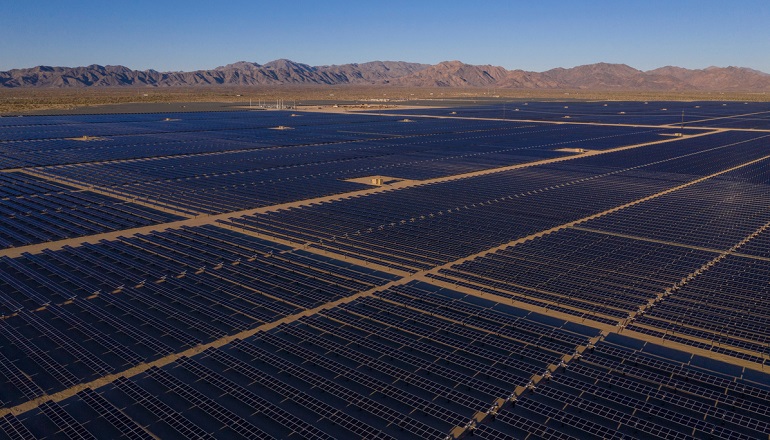
The US solar industry is on track to add a record 32GW of new capacity in 2023, a 52% increase from 2022, according to the Solar Energy Industries Association (SEIA) and Wood Mackenzie.
The solar market has been hampered in recent years by supply chain challenges brought on by covid-19 and exacerbated by restrictive trade policy.
These challenges are beginning to abate, and as policies in the Inflation Reduction Act (IRA) take hold, Wood Mackenzie expects total operating solar capacity to grow from 153GW today to 375GW by 2028 in the US Solar Market Insight Q3 2023 report.
“The United States is now a dominant player in the global clean energy economy, and states like Florida, Texas, Ohio, and Georgia are at the forefront of this job growth and economic prosperity,” said SEIA president and CEO Abigail Ross Hopper.
“The solar and storage industry is delivering abundant clean energy that is generating tens of billions of dollars of private investment, and this is just the tip of the iceberg.”
A surge of new domestic manufacturing investments is also expected to improve supply conditions over the next few years. If these factory announcements materialise, by 2026 US solar module manufacturing output will be ten times greater than it is today.
The utility-scale and residential solar markets led the way with new capacity additions in Q2, growing by 3.3GW and 1.8GW, respectively.
The commercial solar market declined in Q2 primarily due to project interconnection backlogs and a hesitancy to move forward with projects before having full clarity on the IRA’s tax credit adders.
Despite these challenges, increasing energy prices in certain states is driving demand in the commercial solar market, and the sector is expected to grow by 11% in 2023.
Florida continues to dominate the 2023 state solar rankings, installing 2.5GW of new capacity in the first half of this year.
This is 52% more than the next highest state of California and already more solar capacity than Florida has ever installed in a single year.