


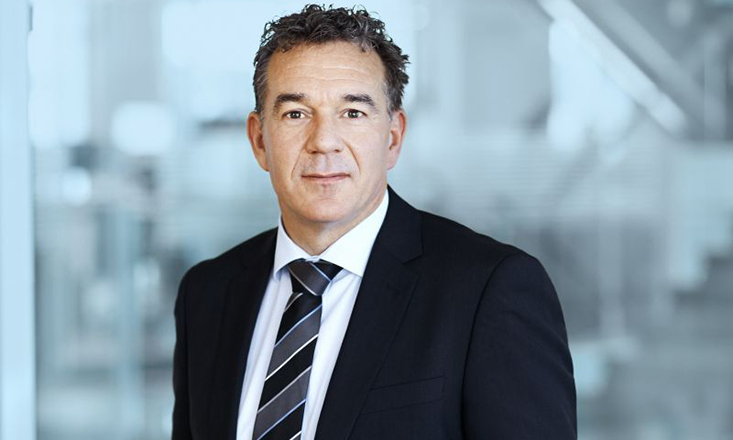
Michael Hannibal of Copenhagen Infrastructure Partners (CIP) today joined Stiesdal Offshore as chief commercial officer with the aim of accelerating the company’s work on floating wind technology.
The appointment strengthens the partnership formed between CIP and Stiesdal Offshore last October to pursue large floating wind projects and together advance floating wind technology, overall project execution, and cost reduction.
While assuming the role of CCO at Stiesdal Offshore, Hannibal (pictured) will remain a partner at CIP but will step out of the daily operations and project decisions.
Partner and chief information officer at CIP Martin Neubert said: “We are very happy to offer Michael’s unique competences and expertise to Stiesdal Offshore on this very important technology.
“Floating wind is key to the further development of offshore wind, and with Michael driving this work at Stiesdal, we will accelerate this technology for the market even more.”
Commenting on his appointment, Hannibal said: “I am excited and privileged to join Stiesdal Offshore as CCO at a crucial time in the development of floating offshore wind.
“It’s an interesting and challenging new role where I can leverage and combine my industrial and investment experiences from more than 20 years focusing on offshore wind.
“I’m looking forward to collaborating with developers, suppliers and regulatory bodies to move floating offshore wind forward being a natural part of the energy mix in many countries.
“I’m joining Stiesdal with a strong ambition of accelerating Stiesdal Offshore as a market leader within floating offshore, and I look forward to working closely together with the team.”
In his role as chief commercial officer, Hannibal will take part of the overall management of Stiesdal Offshore and drive the market-related activities with developers, suppliers and relevant stakeholders.
Hannibal joined Copenhagen Infrastructure Partners as Partner in 2017 as head of CIP’s offshore platform.
Before joining CIP, he was Siemens Gamesa’s chief executive of offshore wind.
Floating wind is expected to grow significantly between 2030 and 2040 as more than 70% of the oceans are too deep for offshore wind standing on the seabed.