


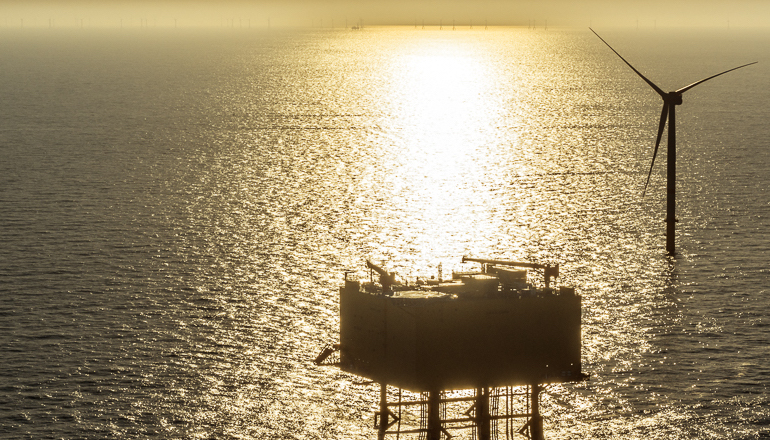
TenneT transmitted almost 21 terawatt hours (TWh) of wind power generated by wind farms in the German North Sea, in 2024, up 8% in 2023.
In 2024 the exact figure was 20.8TWh compared with 19.24TWh in 2023.
The total wind feed-in result in Germany came to around 150TWh) in 2024 (previous year 139.56TWh).
Tim Meyerjurgens, CEO of TenneT Germany, said: “With its enormous potential for wind energy, the North Sea is a stable pillar in Germany’s energy mix and it continues to gain in importance.
“However, in order to use its full potential efficiently, better land use of the North Sea is needed.
“After all, the goal must not be the installed capacity, but the actual energy yield in order to keep costs as low as possible at the same time.
“An intelligent redesign of the areas on the basis of an energy target could save costs in the double-digit billion range.
“Both on the part of the wind farm operators and on the part of us grid operators.
“This could relieve the burden on grid fees and strengthen Germany as a business location.”
In the German North Sea, the maximum value of the feed-in capacity of offshore wind farms in 2024 was measured at 6291MW on 14 July.
TenneT’s offshore transmission capacity is 8032MW in the German North Sea.
The installed capacity of offshore wind farms in the German North Sea was 7387MW on the reporting date of 31 December 2024 (previous year, 7106MW).
On the cut-off date of 31 December 2024, the installed capacity in the Baltic Sea was 1828MW (grid area of 50Hertz, previous year 1352MW).
In 2024, they fed in around 4.89TWh (previous year: 4.17TWh), so that Germany’s total offshore yield in 2024 was around 25.7TWh, with the North Sea accounting for 20.8TWh.