


The level of wind on the Danish power system fell in 2021 due chiefly to a “historically bad” year of wind speeds.
New figures show that wind supplied 43.6%, down from 46.5% in 2020.
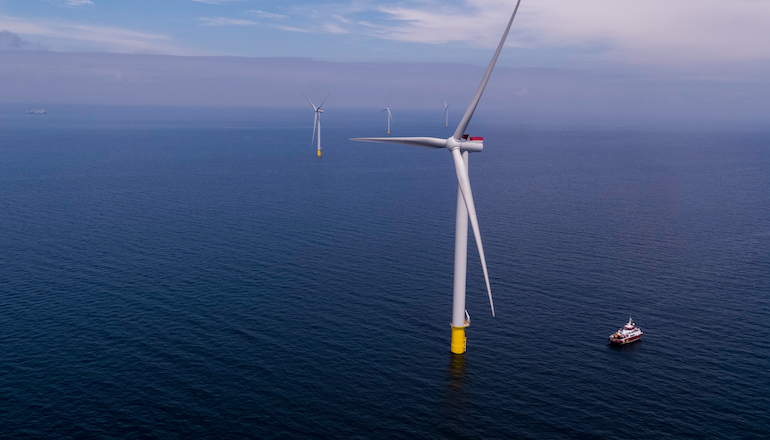
Energinet said the fall was a “noticeable decrease” especially in light of the fact that the 600MW Kriegers Flak offshore project (pictured) came online during 2021.
“The decline is mainly due to the fact that 2021 was a historically bad wind year in Denmark and the whole of northwestern Europe for that matter,” said Jesper Kronborg, senior business developer at Energinet.
“The wind resource in 2021 was thus approximately 10% lower than a normal year, while in 2020 it was approximately. 4% higher. At the same time, electricity consumption in Denmark has increased by almost 5% from 2020 to 2021, which also contributes to a lower wind share.”
Special downgrades requested and paid for from Germany have also in 2021 been partly supplied by Danish wind turbines and resulted in the wind share in 2021 being around 3.7% lower, added the grid company.
“With Kriegers Flak offshore wind farm in full operation all year and if 2022 becomes a fairly normal wind year, then you can probably expect a wind share in 2022, which – despite continued increasing electrification and electricity consumption – will approach 50%,” added Kronborg.
In total renewables supplied 47.2% of the country’s power in 2021.
Denmark recorded a new solar power records in the year, according to the new figures.
PV projects supplied 3.6% of the country’s electricity, up from 3.4% in 2020, said Energinet.
The record comes despite 10% fewer hours of sunshine during the year and 5% higher electricity consumption.
“More solar cells are entering the Danish electricity system in step with the green transition. Therefore, the records are broken because we become better at capturing more energy from the sun,” said Kronborg.
“Already within the next 2-3 years, we expect the share of sun to be over 10 percent. of electricity consumption. The increase is primarily expected to come from extra installed capacity from field facilities,” he added.