


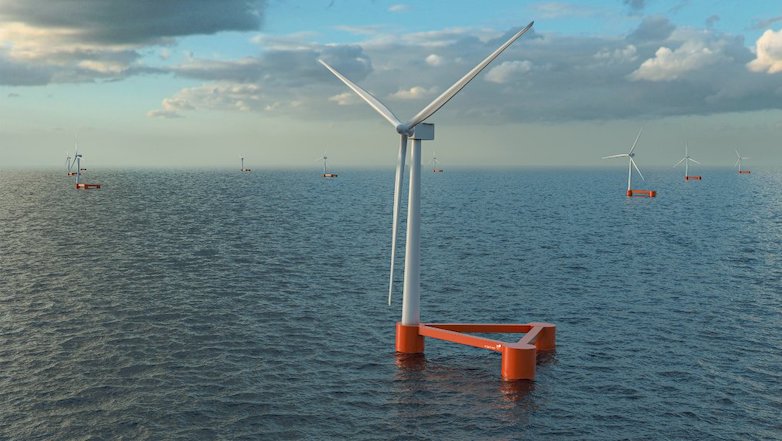
Equinor has designed a new floating wind concept that it claims will enable industrial standardisation and maximise opportunities for local supply chains.
The offshore developer said the Wind Semi foundation is its preferred design for GW-scale projects in the ongoing ScotWind round.
The company has deployed the semi-spar Hywind design on all of its floating projects to date.
The Wind Semi semi-submersible wind turbine foundation will allow for fabrication and assembly based on local supply chain capabilities, said Equinor.
Equinor has developed a set of design principles and solutions that are applicable across floating concepts. The Wind Semi has several features making it particularly suited for harsh waters, and solutions that can maximise the opportunities for the Scottish supply chain, said the company.
These include increased dependability. Equinor said by introducing a passive ballast system, the Wind Semi has a simple substructure design, reducing the risk of system failure and the amount of maintenance needed.
The design is also simpler and more robust, made up of a flat plate design that is free from bracings, heave plates and complicated nodes that are prone to fatigue cracking.
Equinor also said the Wind Semi offers flexibility towards the supply chain. With a harbour draught of less than 10 m, the unit can be assembled at most industrialised ports, it said.
“Hywind Scotland proved that the floating concept works, and as we move to the next generation floating offshore wind projects, we need to demonstrate that floating offshore wind is deployable at scale, in different geographies cost effectively whilst bringing local benefits,” said Sonja C. Indrebø, Equinor’s vice president of Floating Offshore Wind.
“We have seen the journey of fixed bottom offshore wind, and combined with our long experience in floating, we can take learnings into account as we design and innovate the concepts for full-scale GW floating wind farms.”
Equinor added it is technology agnostic and will select the best suited floating wind concept for its projects. Water depths, conditions around shipyards and ports, and the specialisations and capacity of the local supply chain are primary drivers for selecting a given design.
“We are ready to develop the next generation, large-scale commercial floating offshore wind in Scotland,” aded Indrebø.