


Equinor has announced its ambition to become a net-zero energy company by 2050, including emissions from production and final consumption of energy.
The Norwegian energy company said it now plans to expand its acquisition of wind acreage, with the aim of accelerating profitable growth and leveraging its leading position in offshore wind, and said it expects to present an updated strategy at its Capital Markets Day in June 2021.
It added that it will establish renewables as a separate reporting segment from first quarter 2021. Equinor has previously set ambitions for profitable growth within renewables and expects a production capacity of 4-6GW by 2026 and 12-16 GW by 2035.
The company said the new goal sets a clear strategic direction and demonstrates Equinor’s continued commitment to long-term value creation in support of the Paris Agreement.
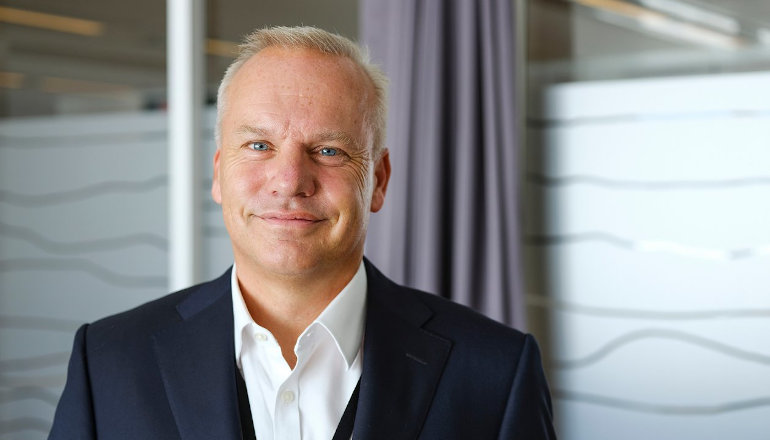
“Equinor is committed to being a leader in the energy transition. It is a sound business strategy to ensure long-term competitiveness during a period of profound changes in the energy systems as society moves towards net zero,” says Anders Opedal who today took over the position as Chief Executive Officer (CEO) and President of Equinor.
“Over the coming months, we will update our strategy to continue to create value for our shareholders and to realise this ambition,” he added.
The net-zero ambition covers scope 1 and 2 GHG emissions (operated basis 100%) and scope 3 GHG emissions (use of products, equity share).
Earlier this year, Equinor announced its plans to achieve carbon neutral global operations by 2030 and to reduce absolute greenhouse gas emissions in Norway to near zero by 2050.
At the same time, Equinor outlined what it described as a value-driven strategy for significant growth within renewables, as well as a new net carbon intensity ambition. Continuing to deliver on the short and mid-term ambitions will be key to achieving net-zero emissions.
“Equinor has for years demonstrated an ability to deliver on climate ambitions and has a strong track record on lowering emissions from oil and gas. Now, we are ready to further strengthen our climate ambitions, aiming to reach net zero by 2050,” Opedal says.
However Equinor said it still expects to deliver an average annual oil and gas production growth of around 3 percent from 2019 to 2026.
By optimizing its portfolio through financial discipline and prioritization, Equinor said it would continue to develop competitive and resilient projects whilst maintaining industry-leading recovery rates, unit costs and carbon efficiency.
It added that is preparing for an expected gradual decline in global demand for oil and gas from around 2030 onwards, and that in the longer term, Equinor expects to produce less oil and gas than today.
The company also emphasised the role of CCS and hydrogen to net zero goals and said it assumes that an increasing share of oil and gas will be used for petrochemicals towards 2050.