


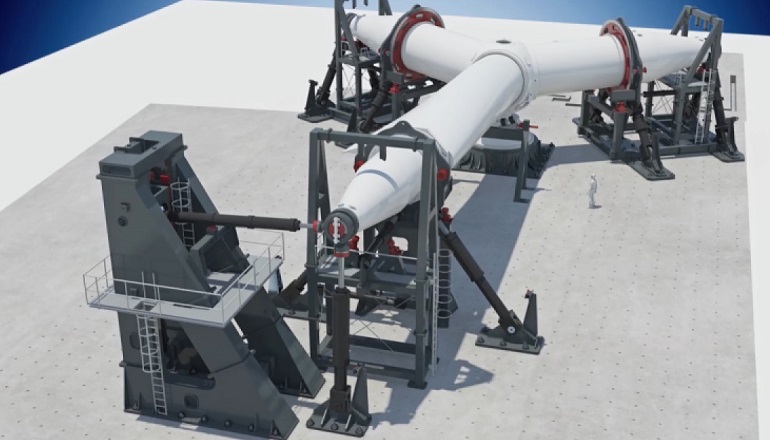
A consortium comprising GE Renewable Energy, LM Wind Power and Dutch research agency TNO will construct a test rig for the largest wind turbine rotors and blades being commercialised.
The test rig will enable the testing of rotor blades under different conditions.
The facility is being built under the three-year Stretch project, with funding from the Dutch Ministry of Economic Affairs.
Construction of the facility at LM Wind Power’s technology centre in Wieringerwerf is expected to be completed in November 2020.
The rotor test rig will allow for verification of the strength and the dynamic behaviour of wind turbine rotors under the mechanical loads created by larger blades.
Knowledge gained in the project will be used to improve existing design tools.
TNO wind energy R&D manager Peter Eecen said: “Without innovations, larger turbines would become too heavy and too expensive to be commercially viable.
“Fast-paced innovation in wind turbine blade and rotor design, materials, construction and manufacturing have made the up-scaling of offshore wind turbines feasible and attractive around the world.
“We are thrilled by this chance to partner with the Dutch government, GE Renewable Energy and LM Wind Power to advance the understanding of rotor technology, which will ultimately contribute to better designs that help make renewable wind energy even more reliable and affordable.”
LM Wind Power engineer vice president Hanif Mashal said: “Establishing the most advanced and largest rotor test rig of its kind shows our commitment to develop insights into rotor technology that go beyond blade production alone.
“With this innovative rotor rig, we will be able to verify in-house the pitch bearings and pitch system that fix the wind turbine blades to the hub and allows pitching blade maximising captured energy while reducing loads on wind turbine.
“This capability will provide our customers with a better understanding of the dynamic behaviour of large onshore and offshore rotors and will help LM Wind Power design ultra-large rotor blades by stretching and improving the existing designs.”