


Renewable energy generated a record 37% of the UK’s electricity demand in 2019, with wind contributing more than half of the amount, according to new statistics released by the UK government.
The annual figures, published in the Department for Business, Energy and Industrial Strategy’s quarterly Energy Trends report, reveal wind provided a record 20% of the UK’s power last year.
Onshore and offshore wind farms each contributed 9.9% of this amount.
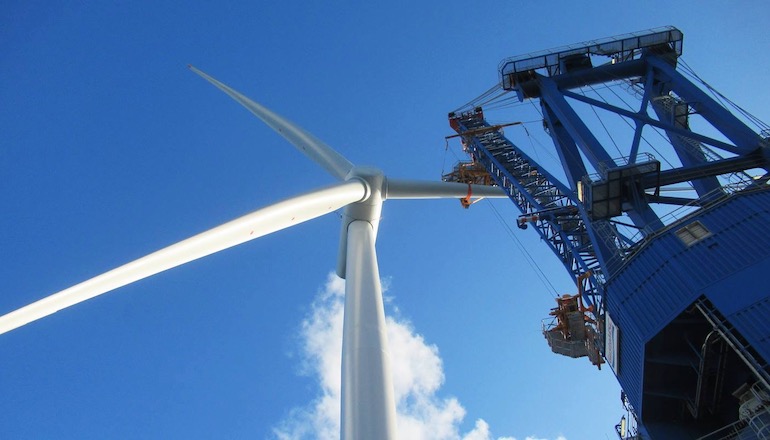
Capacity at the Hornsea One (pictured) offshore wind farm gradually increased over the year and stood at 1218MW by the end of 2019, making it the largest offshore wind farm in the world, the BEIS analysis noted.
Wind also generated record annual quantities of power, with onshore and offshore each providing 32 terawatt hours (TWh), while the total amount of electricity generation from all sources reached 324TWh.
Last year also saw record electricity generation from bioenergy at 36.6TWh, up 5.2% on the 34.8TWh generated in 2018.
The reopening of the Lynemouth power station as a biomass fuelled plant in late 2018 boosted output.
In 2019 solar generated 12.7TWh of electricity, down 1.4% from 12.9TWh in 2018, due in part to a reduction in average sunlight hours, whereas 2018 had been a record breaking year for solar generation.
Hydro generation also rose, by 8.5% on 2018, which had been a relatively low year. Generation was at a similar level to that of 2017 (6TWh compared to 5.9TWh).
Overall, renewable energy delivered 119.3TWh in 2019, up from 110TWh the year previously.
Installed capacity rose to 47.7GW at the end of the year, up 3GW or 6.9% on 2018.
BEIS said this was the smallest rise since 2010.
Onshore wind capacity stood at 14.2GW, with offshore accounting for 9.7GW, at the end of last year, while solar capacity reached over 13.6GW.
According to the figures from BEIS in 2019 UK greenhouse gas emissions were 45.2% lower than in 1990 and 3.6% lower than 2018.
The government said this mainly due to changes in the fuel mix used for electricity generation, away from coal and towards renewables.
Meanwhile, natural gas generated 40.9% and coal dropped to 2.1%.
The statistics released by BEIS also cover the fourth quarter of 2019, with wind setting a new quarterly record by generating 22.3% of UK electricity. Onshore set a new record of 10.2TWh and offshore a new record of 9.2TWh).
Renewables overall provided 37.4%, a record amount of 32.5TWh.
RenewableUK deputy chief executive Melanie Onn said: “Today’s record-breaking figures show just how radically the UK’s energy system is changing, with low-cost renewables at the vanguard.
“This will continue as we build a modern energy system, moving away from fossil fuels to reach net zero emissions as fast as possible. As well as wind, we’ll use innovative new technologies like renewable hydrogen and marine power, and we’ll scale up battery storage.”
“Low-cost renewables are central to the government’s energy strategy and our sector will grow rapidly in the years ahead, as our domestic supply chain expands and we continue to seize multi-billion pound export opportunities around the world”.