


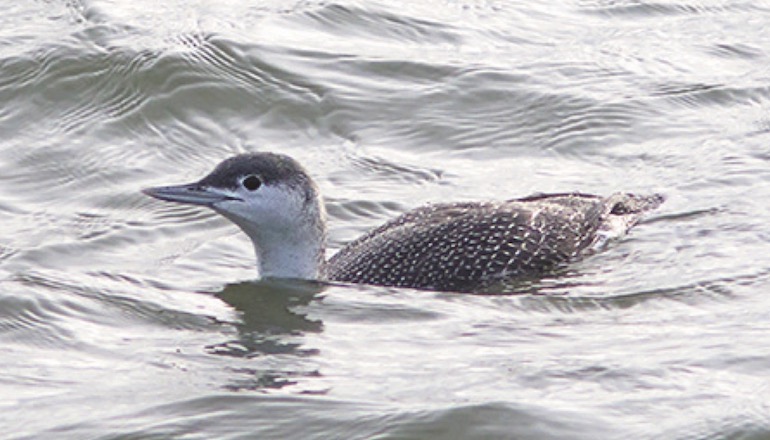
The expansion of offshore wind farms in the German Bight region of the North Sea has had no negative impact of the population of birds known as Loons, according to a study commissioned by the Federal Association of Offshore Wind Farm Operators (BWO).
The study – ‘Divers in the German North Sea: Changes in Abundance and Effects of Offshore Wind Farms’ – examined the possible impact of projects on the population and the habitat of the two types of Loons: Star and Sea Divers.
It found that populations have remained stable since the expansion of wind energy, BWO said.
The study was carried out by BioConsult, IBL Umweltplanung and the Institute for Applied Ecosystem Research using data for the years 2001 to 2018 and, for the first time, winter stocks in addition to spring stocks.
BWO managing director Stefan Thimm said: “The study shows that climate and species protection do not contradict each other.
“This was already shown in the Gescha-2 study, which found no measurable effects of offshore ramming on the porpoise occurrence in the German North Sea.
“The operators of offshore wind farms will continue to work to further reduce any interference caused by innovations in construction and operation.”
BWO commissioned report for EnBW, RWE Renewables, Innogy, Merkur Offshore, Orsted Wind Power, OWP Butendiek, OWP Nordergrund, PNE, Trianel Windkraftwerk Borkum, Vattenfall Europe Windkraft and WindMW.