


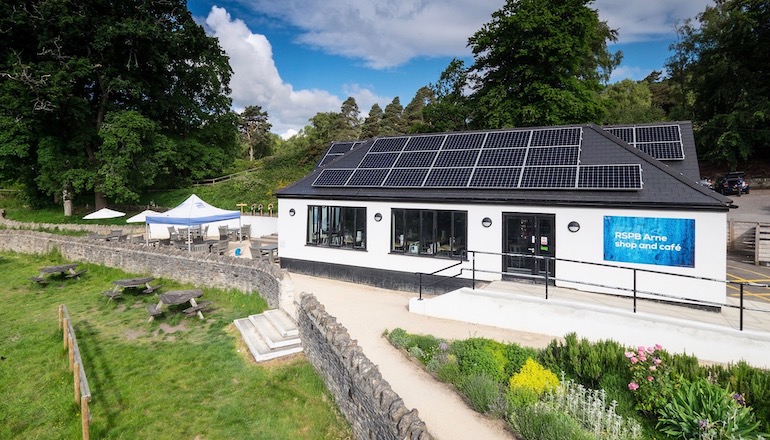
UK bird charity RSPB has been loaned £710,000 by Triodos Bank to install solar panels at seven nature reserves.
Over 700 panels have been installed at places including Minsmere, The Lodge and Bempton Cliffs.
They are expected to provide up to 80% of the sites’ annual energy requirements.
The RSPB has also used the finance to install a new biomass boiler at Old Moor and deploy energy-efficient LED lighting across 10 office locations.
The new measures are part of the RSPB’s ongoing sustainability programme, with the organisation aiming to generate at least 50% of the energy that it uses from sources on its own estate by 2020.
The deal with Triodos Bank allows the RSPB to focus its charitable donations from the public into live conservation projects, while the repayments of the renewable energy projects are paid for by ongoing energy bill savings, plus payments from electricity generation over a 20-year period.
RSPB deputy director of global conservation Ruth Davis said: “We are all becoming more aware of the growing threat climate disruption poses for people and nature.
“As an environmental body, we have adopted targets to drive reductions in our carbon footprint, including through energy efficiency and generating energy at our nature reserves.
“I am delighted that we have been able to achieve this through our developing Conservation Investment Programme, with the support of Triodos and Environmental Finance.”
Triodos Bank senior relationship manager Phillip Bate said: “We are really proud that RSPB has chosen us to be its partner to finance this project.
“Our values and mission as a bank align well with its work protecting and restoring habitats, while helping the UK’s bird species to thrive.
“Efforts from all organisations to reduce their carbon footprints should be encouraged and we are pleased to help the RSPB take steps in reducing its own environmental impacts.”
RSPB said the solar panel installations have been carefully located to avoid impacts on nature and have been carried out to ensure there are no impacts on specially protected species.
Some panels are roof mounted on reserve buildings, others on car park canopies.