


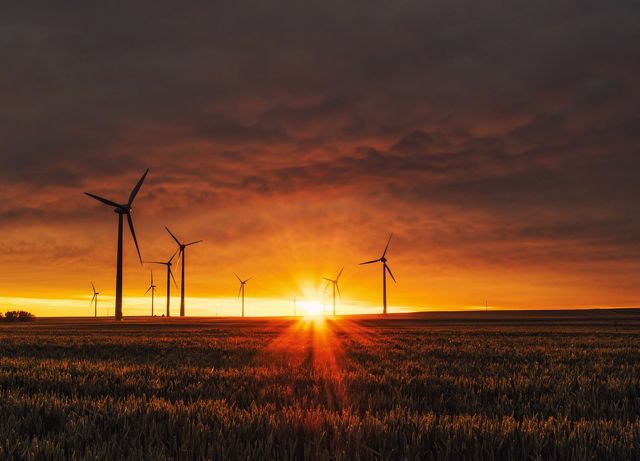
Installed wind and solar energy capacity in Italy will grow to 63GW in 2030 from about 35GW currently, squeezing out thermal generation as the dominant electricity source, according to GlobalData.
The analyst’s latest report ‘Italy Power Market Outlook to 2030, Update 2018 – Market Trends, Regulations, and Competitive Landscape’ finds renewable power is Italy’s fastest-growing energy source.
According to GlobalData power analyst Chiradeep Chatterjee drivers include the 2011 referendum that closed any option for the government to restart nuclear power generation and a rising need to ensure energy security.
Chatterjee said: “Installed non-hydro renewable capacity increased from 1.7GW in 2000 to 34.5GW in 2017.”
Solar capacity soared to around 19.7GW in 2017 from 19MW in 2000, GlobalData said.
“The onshore wind market also grew exponentially, from 364MW to 9.8GW, owing to strong policy support from the government in the form of feed-in tariffs. From 2018 to 2030, renewable installed capacity is expected to grow to 63.4GW in 2030,” Chatterjee said.
Other drivers facilitating wind and solar uptake include government policy focused on scrapping coal based capacity between 2025 and 2030, plus renewable energy auctions that will start by 2020, for replacement capacity.
However, the report also points out that continuous modifications to the support schemes deter long-term investment planning and hinder access to financing and unclear taxation rules are also a significant barrier, especially for biofuels.
Italy derived most of its electricity from thermal power in 2017, which contributed to 50.7% of its installed capacity, mainly in the form of natural gas.
From 2018 to 2030, installed thermal capacity is expected to decrease to 51.1 GW, at a negative compound annual growth rate of 1.1%.