


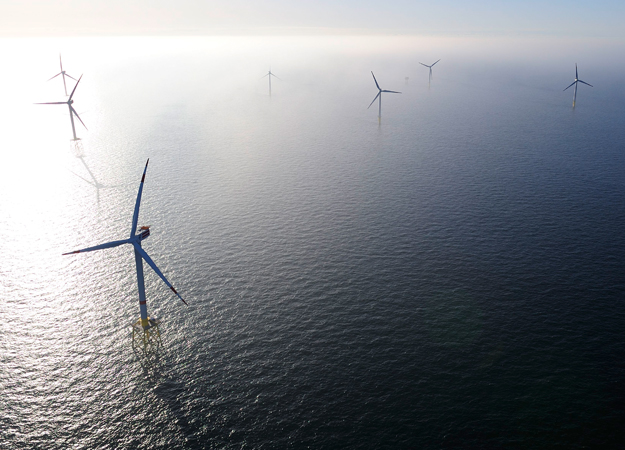
Building offshore wind far from shore could circumvent barriers to coastal development but will need new legal frameworks for these sites, advises a new report from specialist renewable energy law firm Chatham Partners.
The high seas are all regions of the sea that sit outside the control of a single nation. They make up 50% of the surface area of the planet, and cover over two thirds of the oceans.
However, according to Chatham Partners, the lack of clear rules covering development in the high seas will be a challenge for using any of these areas for offshore wind.
According to the report, ‘Offshore Wind in High Seas: Unlimited potential beyond national control?’, the industry should call for discussions to form a robust legal framework now, or risk missing the opportunities the high seas could offer in decades to come.
The study stated, “Global efforts towards decarbonisation have proven offshore wind to be a viable alternative power source to fossil fuels,” while acknowledging technological innovation, such as floating wind, can enable wind farms to built further out at sea.
However, the sector could still face challenges in developing close to shore due to countries’ desire to protect coastal ecosystems, and conflicts with local industries and the military or simply inactivity. These would not be obstacles in most of the high seas, said the report.
“While offshore wind at high seas clearly has barriers to overcome, it could drastically increase capacity by adding almost 70% more construction space to consider. However, if offshore wind were to look to the high seas for development, the lack of a legal framework will become a major obstacle.”
In particular, uncertainty around right of use, ownership and jurisdiction of the high seas presents a significant challenge, according to the report.
Chatham Partners notes that precedents for international cooperation in order to take advantage of valuable resources already exist in the scope of current legislation.
For example, fishing is regulated in the high seas by Regional Fisheries Management Organisations.
The International Seabed Authority (ISA) acts as a governing body to authorise public and private organisations to extract minerals from the deep seabed outside their states’ jurisdiction.
In addition, a treaty for biodiversity beyond national jurisdiction is currently proposed that may introduce so-called “area-based management tools” as well as various forms of governance – concepts that could include or serve as an example for a framework concerning offshore wind.
However, these precedents provide an example for the offshore wind industry of how many years a legal framework can take to be built. The ISA took more than 20 years of negotiation between member states to formally establish.
The treaty concerning biodiversity has been negotiated since 2004 and will likely stay a draft for several years to come, said Chatham Partners.
Felix Fischer, a partner at the law firm said: “Currently, offshore wind developers are only able to consider a third of the available sea when planning new sites.
“The high seas could have the potential to further unlock the expansion of offshore wind beyond what can be developed along coastlines if the industry deems it feasible from an economic and technical perspective. However, the technology to allow development in these areas could outpace the legislation.
“Without a legal framework, these sites will remain out of reach for developers for decades to come. If the high seas should become part of the answer to expanding offshore wind development and contribute to global decarbonisation, building a viable legal framework is critical.”