


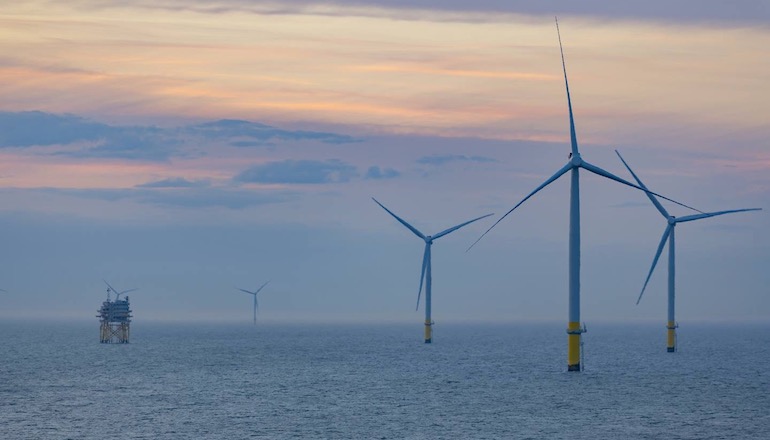
Up to 1400GW of offshore wind capacity is possible around the world by 2050, according to the Ocean Renewable Energy Action Coalition (OREAC).
OREAC, which includes major players in the offshore wind sector such as Orsted and Equinor, said 1400GW is achievable considering the resource potential, technology innovation and government appetite to position offshore wind at the centre of the global energy transition.
It estimates that offshore wind could provide around 24 million years of employment – defined as full-time work for one person per calendar year with 260 working days – by 2050, if the 1400GW vision is achieved.
Later this year, OREAC will launch a roadmap for 2050, which will outline the actions needed to support industry and policymakers in achieving the vision.
The report, which is being delivered by BVG Associates, will address: offshore wind’s socioeconomic benefits and role in mitigating climate change; policy, infrastructure and market frameworks which enable sector growth; safety considerations; environmental planning; the importance of colocation and coexistence with fisheries and other marine users; and other ocean-based renewable energy technologies.
OREAC was formed in response to the 2019 call for ocean-based climate action by the High Level Panel for a Sustainable Ocean Economy, and represents ocean energy in the global dialogue on a sustainable ocean economy.
Other companies involved include CWind, Global Marine Group, JERA, MHI Vestas, MingYang Smart Energy, Mainstream Renewable Power, Shell, Siemens Gamesa, TenneT, and GE Renewable Energy.
Additional partner organisations include Global Wind Energy Council, World Resources Institute, UN Global Compact, the Chinese Wind Energy Association and Ocean Energy Systems.
The Ocean Panel commissioned a report into ocean renewables, which found 1400GW is achieveable.
Orsted head of market development, consenting and axternal Affairs Benj Sykes said: “In a short period of time, offshore wind has become an incredibly competitive solution for clean power generation across the world, with impressive cost reduction driving the industry’s growth by over 30% in the past decade and now outcompeting alternative fuels such as coal.
“Over 30GW of capacity is already installed, yet this is just the tip of the iceberg for the massive growth potential of offshore wind.
“Working alongside other technologies such as renewable hydrogen could further bolster offshore wind’s ability to power economies across the world sustainably and at a low cost.
“The sector’s success to date has been built on collaboration with governments, and OREAC is ready to work with policymakers across the globe to deliver this potential and realise our clean energy future sooner than ever thought possible.”
Equinor senior vice president offshore wind Stephen Bull said: “The ongoing Covid-19 crisis has forced us to take a step back and rethink the future we want to create for the next generation.
“Going back to ‘normal’ is not an option if we want to build more resilient economies and sustainable development pathways that will benefit all citizens.
“Offshore wind can promote better health by reducing air pollution, increase energy security by reducing dependence on expensive imported fuels, save billions of litres of water, reduce the harmful environmental, social and economic impacts of climate change, and be an important driver of economic growth and job creation.
“While this may seem too good to be true, the reality is that offshore wind is ready to deliver now.
“It can provide all these benefits and more to drive a sustainable economic recovery and contribute to thriving, sustainable economies of the future.”