


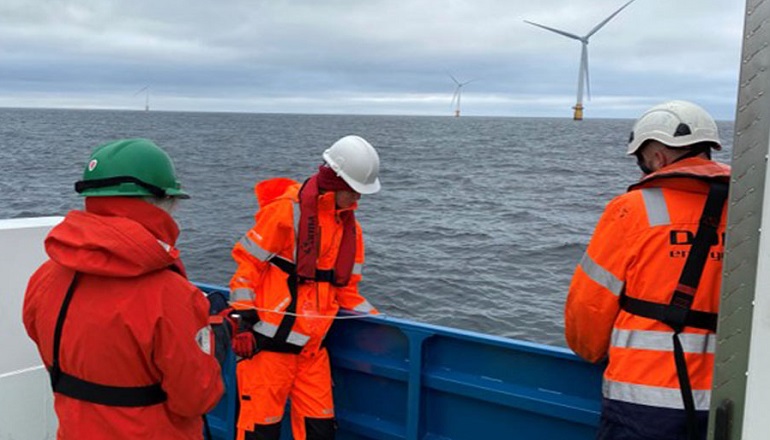
A pilot study completed by Equinor and Norwegian Research Centre (NORCE) has been successful in using environmental DNA (eDNA) to monitor marine life in waters around the floating Hywind Scotland wind farm.
The pilot project took place in August 2021 at Equinor’s Hywind Scotland offshore wind farm, located 25km east of Peterhead.
The field work was conducted by NORCE with support from Ocean Science Consulting (OSC).
After the samples were taken, lab work was undertaken to analyse the specimens using polymerase chain reaction (PCR) DNA sequencing.
By analysing the eDNA content in water samples, Equinor and NORCE were able to measure the biodiversity of fish species surrounding Hywind Scotland.
This study was conducted to learn more about the potential effects that floating offshore wind farms may have on marine habitats.
eDNA is genetic material released from organisms into their surrounding environment, such as soil, air, sediment, or water.
In the study it was identified that there were in total 26 fish species in the area.
There was no significant difference in biodiversity observed between the wind farm area and the reference zone, however the relative abundance of sprats and herring were higher in the wind farm area.
There was also a faint eDNA signal from harbour porpoise recorded in the waters surrounding the wind farm.
Principal researcher at Equinor Kari Mette Murvoll said: “This new method of surveying marine biodiversity is an exciting development for measuring biodiversity.
“By reducing the need for traditional trawling campaigns, we can help protect the environment and reduce emissions, while still gathering reliable and accurate data on the species in the area.
“The potential for this method to be used in other areas of marine biology research is vast, and I look forward to seeing further advancements in this area in the future.”
Gathering data on fish biodiversity has typically been a laborious and costly process, while also having the potential to cause harm to the environment.
An often-used strategy is to employ specialised boats to trawl with fishing vessels through a region at regular intervals to collect and analyse the fish, in combination with echo sonars to identify and calculate the quantity of fish.
Research professor at NORCE Thomas Gunnar Dahlgren added: “We are proud to be part of this pilot study which is helping us to better understand the potential impacts of floating offshore wind farms on our marine ecosystems.
“By analysing the eDNA content of water samples, we have been able to gain valuable insights into the biodiversity of fish species in the water around the Hywind Scotland wind farm.”
A similar-sized reference area, located approximately 10km east of the site, was also sampled to give comparative results.