


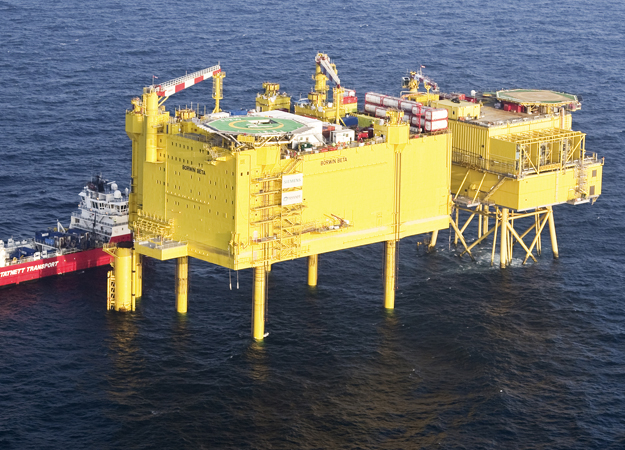
German TSOs TenneT and 50Hertz have joined forces to transport offshore wind power generated by North Sea installations into the German extra high voltage grid for the first time.
The two companies have signed a cooperation agreement to create a multi-terminal hub in the area of Heide in the state of Schleswig-Holstein as well as an extra-high voltage direct current link (HVDC) to the state of Mecklenburg-Vorpommern, they said in a joint statement Monday.
The project is part of grid development plans to 2035 put forward by the energy agency Bundesnetzagentur (BNetzA).
In detail, the multi-terminal hub will rely on an innovative design which allows the direct connection of two offshore systems, each with a capacity of 2GW, to a single onshore terminal. It will also include a converter to convert direct current (DC) into alternating current (AC).
The electricity will power planned offshore hydrogen electrolysers for industrial use in the region, as well as being transported into the grid.
The two companies also plan to lay a 200 kilometers-long direct-current underground cable that will transmit electricity at the 525 kilovolt (kV) voltage level.
The two offshore grid connection system set to be implemented separately: the NOR-12-2 system will be connected to the multi-terminal-hub by 50Hertz and the NOR-X-3 system by TenneT.
The multi-terminal hub solution is an innovation as up to now, direct current connections at sea and on land have been realised as pure point-to-point connections, while the multi-terminal hub, however, several direct current connections converge, allowing to build only one AD/DC converter station.
“The concept enables to accelerate the expansion of offshore wind energy, as envisaged by the new German government” Tim Meyerjürgens, COO of TenneT said.
“With the implementation of the onshore hub and the three grid expansion projects linked to it, it will be possible to connect four gigawatts of offshore wind energy from the North Sea in the area of Heide as early as 2032.”
“This means that one part of the project will be completed three years and another even five years earlier than originally planned in the grid development plan.”