


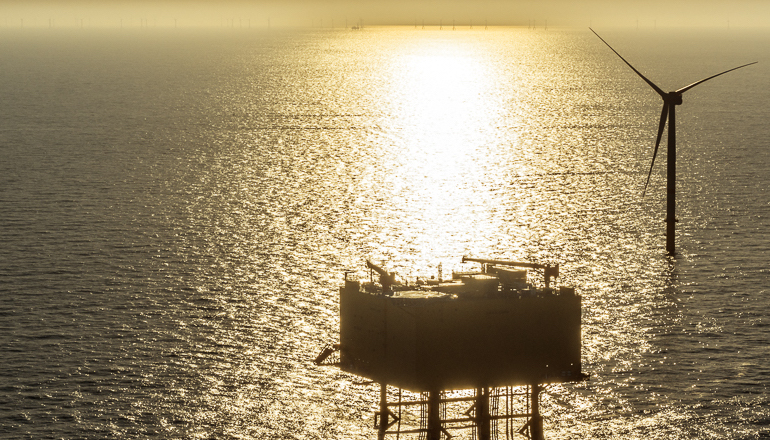
TenneT delivered almost 23TWh of wind energy from the German North Sea to shore last year, which the TSO says is a new peak.
The figure for 2020 of 22.76TWh exceeds the previous year’s 20.25TWh by 12.4%.
This means that the annual needs of around seven million households – three-quarters of a million more than in the previous year – can be met with green energy, the company said.
Electricity transmission from the North Sea accounts for a strong 17.2% of total wind power generation in Germany, which reached 132.32TWh in 2020.
TenneT managing director Tim Meyerjürgens said: “The North Sea will be the new powerhouse of North-West Europe.
“TenneT already operates offshore grid connections in Germany and the Netherlands with a transmission capacity of around 8500MW, of which more than 7000MW are in the German North Sea.
“The Federal Government also sees the enormous importance of the North Sea for our electricity supply and has raised the targets for 2030 to 20,000MW, most of which TenneT will realize with about 17,000MW.
“In addition, there is the TenneT offshore network in the Netherlands, where we will increase the transmission capacity to 9600MW by 2030. Taken together, this adoes more than 26,000MW in 2030.
“To this end, we will invest €20bn in the North Sea alone in the next few years.”
In addition, TenneT plans to build a first cross-border wind energy distribution cross by 2035 together with consortium partners in the North Sea.
The distribution cross is intended to supply Denmark, the Netherlands and Germany with green wind power from the North Sea.