


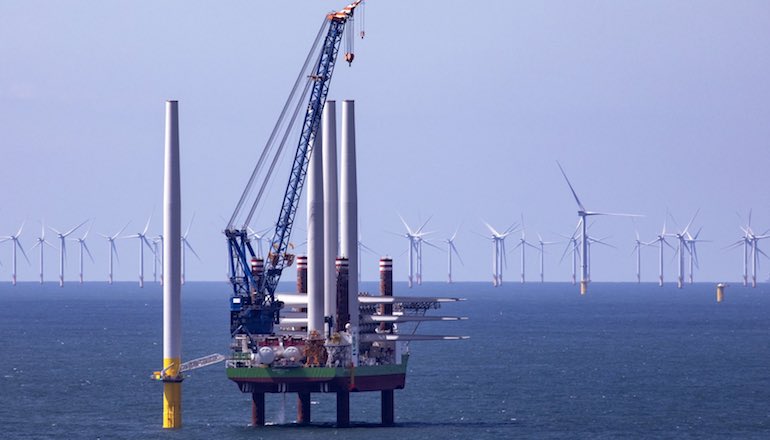
A more integrated approach for the deployment of UK offshore energy networks is needed to avoid overcrowding in the sea, according to a new report from the Institution of Engineering and Technology (IET).
The offshore energy sector, spanning oil and gas, wind, hydrogen and electricity transmission, coupled with the sea’s finite resource, means without clear coordination the opportunity to maximise the benefits of all existing and emerging technologies in the transition to net zero will be constrained, the IET stated.
Renewable Consulting Group director and IET energy policy panel member Elaine Greig said: “Seas around the UK are an important resource however the offshore energy space is very limited and under heavy demand for both use and protection.
“The marine environment is a very powerful asset to the UK, but it is in danger of being ‘full’ if we do not properly plan the vital role it could play in reaching net zero.”
The UK Government has set a target to install 40GW of offshore wind by 2030, which will take all of the current capacity, Greig said.
“A strategy to effectively deploy new renewable energy and grid networks, while adapting current infrastructure, both offshore and onshore is vital,” she added.
Beyond the 2030 target, additional capacity of renewable energy, including offshore wind, will be required to meet the ultimate goal of net zero by 2050.
“It is imperative that there is a more joined up approach – the first step being full engagement with the whole energy industry in planned coordination,” Greig added.
Constraints have also been identified on common cable landing locations across the UK, with only increased pressure in response to the new targets.
The IET’s landscaping report maps the UK’s offshore cable landing points and grid connection models, reiterating the importance that both must be considered in a coordinated energy system.
The report examined the market and found there are at least 50 “high-profile” industry initiatives with over 500 participants in various interest groups and a significant number of smaller initiatives also taking place.
Of these, there are 16 key groups “actively progressing” offshore network integration, the report found and highlighted the “urgent need to inform and implement opportunities for better integration”.
Benefits of a joined-up approach stretch “far wider” than the UK’s net zero targets with more efficient supply chains, better regulation, the creation of jobs and lower overall cost (including to the end user), the report said.
Greig said: “Areas such as the Baltic region in the EU demonstrates to us that in an area where there is no market competition and generation, the industry is able work together to develop a coordinated multipurpose system.
“This is an approach we need to adopt should we want to maximise the benefits of all existing and emerging technologies to transition to net zero.”