


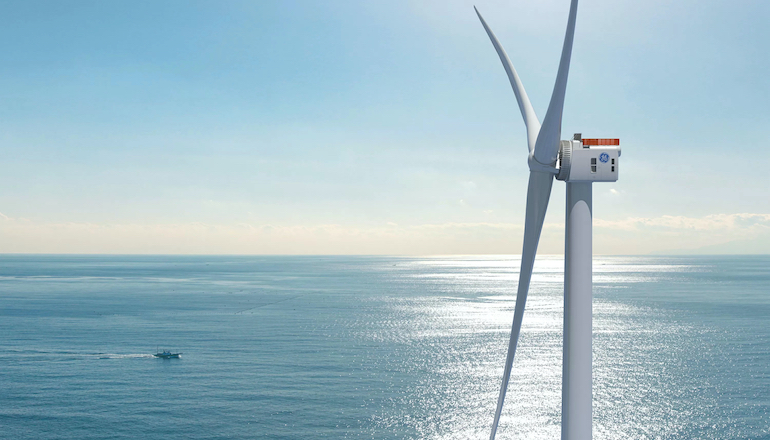
The European wind industry needs to slow down in its attempts to further drive down the levelised cost of energy (LCoE) and scale back on building bigger turbines, according to K2 Management.
The renewable energy engineering and project management consultancy stated that ambitious targets for wind set by European governments “will not be met” unless the “inexorable push” to lower the cost of renewable energy is reined back.
K2 Management said that by consolidating product portfolios and focusing research and development away from simply increasing turbine capacity, “beleaguered” turbine manufacturers may “begin to stem the large losses”.
Manufacturers must currently “bear the brunt” of significant inflation in commodity prices and raw materials, while impediments in development timelines are preventing smooth and consistent order pipelines, the company said.
K2 pointed to losses that have been demonstrated by both Siemens Gamesa Renewable Energy, which reported losses of more than €600m in the first half of its fiscal year and Vestas, which recorded an €894m operating loss in the first quarter of 2022.
“It is clear that there is a fundamental economic imbalance when – in one of the world’s fastest growing industries, which has huge growth targets this decade – its key manufacturer stakeholders are making such enormous losses,” said Will Sheard, director of analysis and due diligence, at K2 Management.
He added: “This is without doubt a multi-faceted challenge, exacerbated by the current macro-economic situation.
“But the wind industry – and the energy transition generally – may be best served by turbine manufacturers taking their foot off the accelerator when it comes to driving innovation, and simply working to deliver a small portfolio of core products, in great number, to help developers achieve these large capacity targets.”
With LCoE for wind now at a highly competitive point, there is an opportunity for turbine makers to scale back in their ambitions for new, ever more efficient equipment, and standardise offshore at machines in the order of 15-16MW, said Sheard.
He said: “Governments cannot legislate to force our industry to focus on project delivery – and indeed, many of their policies have set us on this current path – so it’s up to us as an industry to collectively agree on the type of machines that will be available for the development window out to 2030.
“It sounds drastic, but the longevity of our key manufacturing partners may depend on such measures.”