


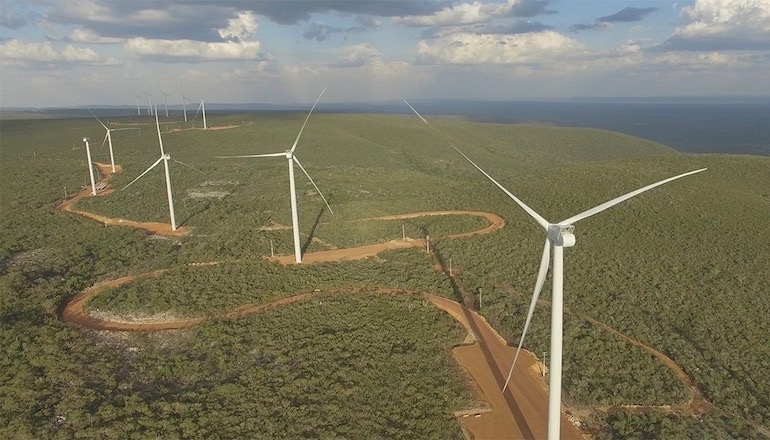
Renewable energy capacity in Brazil, excluding small hydro, is expected to reach almost 61GW by 2030, compared with 31GW last year, according to a new report from GlobalData.
The report – ‘Brazil Power Market Outlook to 2030, Update 2019 – Market Trends, Regulations, and Competitive Landscape’ – said that there would be a compound annual growth rate of 6% between 2018 and 2030 in the South American country.
It said that increased clean power auctions, the promotion of hybrid renewables projects and other government initiatives, such as tax incentives, smart metering, green power targets and favourable grid access policies would be the reasons for the growth.
Solar and onshore wind are expected to grow at rates 14% and 6%, respectively, making renewables the second largest contributor to the country’s energy mix by 2030.
GlobalData power industry analyst Arkapal Sil said: “The connection of over 25,000 power systems, mostly solar PV systems to the Brazilian grid in mid-2018 under the net metering scheme, further underpins the renewable growth pattern over the forecast period.
“The main challenges for Brazil’s power sector are its overdependence on cheap hydropower for base-load capacity and lack of a robust power grid infrastructure.
“In 2018, hydropower accounted for 62.7% of the country’s total installed capacity. In case of a drought, depletion of dam reservoirs could result in power shortages and switching over to costly thermal power which will increase the electricity prices.”
In the long term, hydropower capacity is expected to decline and be compensated with increased renewable power capacity, while thermal and renewable capacities are slated to increase and contribute 28% and 18%, respectively of the installed capacity in 2030.
Sil said: “Brazil is moving towards a balanced energy mix as it prepares to double its non-hydro renewable power capacity by 2030.
“With an almost 10GW increase in thermal power capacity by 2030 compared to 2018, the country is on course to better manage peak demand, reduce dependence on hydropower and maintain a healthy grid.”