


The coronavirus pandemic has led to a $400bn (€359bn) drop in global energy investment, affecting renewables and fossil fuels, according to a new forecast from the International Energy Agency (IEA).
The IEA stated in its World Energy Investment 2020 report, “The unparalleled decline is staggering in both its scale and swiftness, with serious potential implications for energy security and clean energy transitions.”
At the start of 2020, global energy investment was on track for growth of around 2%, which would have been the largest annual rise in spending in six years.
The study now forecasts global investment is to “plummet” by 20%, compared with last year, in the wake of lockdowns around the world to contain the spread of Covid-19.
Renewables investment has been more resilient during the crisis than fossil fuels, though final investment decisions in the first quarter of 2020 for new utility-scale wind and solar projects fell back to the levels of three years ago, the report found.
The overall share of global energy spending in clean energy technologies – including renewables, efficiency, nuclear and carbon capture, utilisation and storage – will rise to 40%, from a third, but “only because fossil fuels are taking such a heavy hit”, said the IEA’s report.
“In absolute terms, it remains far below the levels that would be required to accelerate energy transitions,” stated the IEA.
A combination of falling demand, lower prices and a rise in cases of non-payment of bills means that energy revenues going to governments and industry are set to fall by well over $1tn in 2020, the report found, with oil accounting for most of this decline.
Power sector spending is on course to decrease by 10% in 2020, with worrying signals for the development of more secure and sustainable power systems.
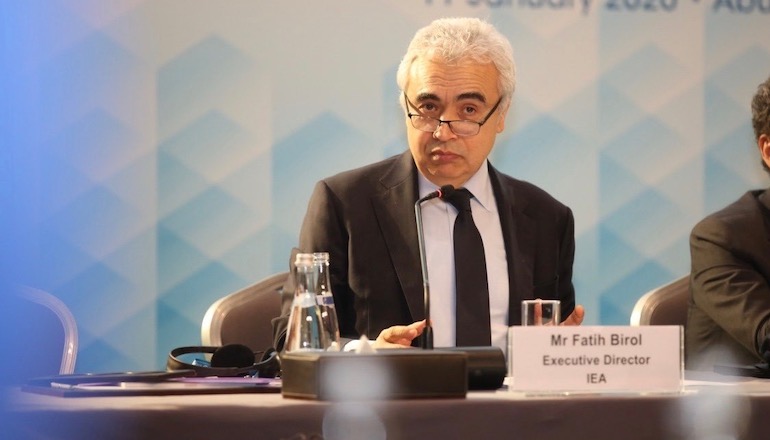
IEA executive director Fatih Birol (pictured) said: “The historic plunge in global energy investment is deeply troubling for many reasons.
“It means lost jobs and economic opportunities today, as well as lost energy supply that we might well need tomorrow once the economy recovers. The slowdown in spending on key clean energy technologies also risks undermining the much-needed transition to more resilient and sustainable energy systems.”
Spending on sources of power system flexibility has also stalled, with investment in natural gas plants stagnating and spending on battery storage levelling off, said the study.
Birol said: “These networks have to be resilient and smart to ward against future shocks but also to accommodate rising shares of wind and solar power. Today’s investment trends are clear warning signs for future electricity security.”
He added: “The crisis has brought lower emissions but for all the wrong reasons. If we are to achieve a lasting reduction in global emissions, then we will need to see a rapid increase in clean energy investment.
“The response of policy makers – and the extent to which energy and sustainability concerns are integrated into their recovery strategies – will be critical.”
Based on available data and announced projects, approvals of new coal plants in the first quarter of 2020, mainly in China, were running at twice the rate observed over 2019 as a whole, found the report.