


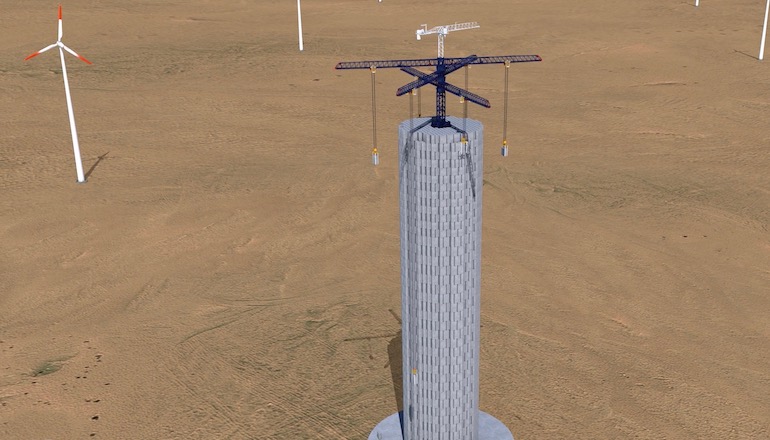
The venture capital unit of Mexican cement giant Cemex is investing in Swiss company Energy Vault, which has developed energy storage technology inspired by pumped hydro plants.
Energy Vault’s system replaces water with custom made concrete bricks that are combined with a proprietary algorithm-based software to operate a crane.
The crane orchestrates an energy storage tower and electricity charge/discharge, while taking account of number of factors, such as energy supply and demand volatility, weather, inertia and system deflection, Cemex said.
The investment by Cemex Ventures follows a previously announced technology partnership with Cemex to provide concrete and other composite material technology for Energy Vault’s storage towers.
Cemex said the system can deliver all the benefits of a gravity-based pumped hydro system with lower price, higher round trip efficiency, without the requirement for specific land topographies and negative environmental or wildlife impacts.
Cemex Ventures chief executive Gonzalo Galindo said: “Energy storage that enables power to be delivered for less than the cost of fossil fuels is critical as the world shifts away from its reliance on carbon-based fuels to renewable energy.
“Energy Vault’s storage technology is transformational, and we’re extremely pleased to broaden our relationship and support the company’s efforts.
“The investment is also important because it complements the Cemex R&D partnership and will accelerate our corporate objectives to achieve a carbon-free industrial footprint.”
Energy Vault chief executive and co-founder Robert Piconi said: “Cemex is a key strategic partner that adds critical innovations in material science that enhance both the economics and longevity of our energy storage system, and we’re thrilled to expand our partnership to welcome Cemex Ventures as an investor.
“The combination of Cemex’s smart concrete solutions, significant global infrastructure and now its strategic investment will accelerate our ability to enable renewable energy to replace fossil fuels 24 hours a day.”