


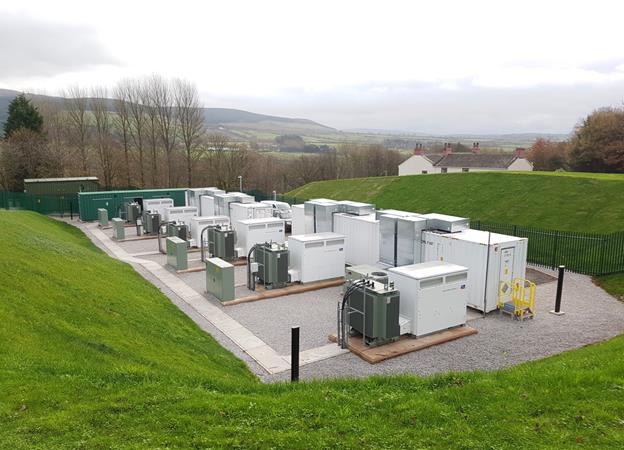
The EU, UK, Norway, and Switzerland together are expected to reach 100 GW of installed energy storage later this month, according to new analysis from LCP Delta and Energy Storage Europe.
The report was launched at the Enlit Europe conference this week.
The milestone represents enough capacity to meet the peak electricity demand of Germany and the Netherlands.
Pumped-hydro storage (PHS) holds the largest share of installed capacity, at 50.6 GW, including 500 MW added this year in Belgium and Austria.
Battery storage has expanded more rapidly, with over 4 GW of new utility-scale capacity in 2025 alone, the analysis shows.
Residential battery sales, after significant growth driven by early-2020 subsidies, are now stabilising following their 2022–2023 peak.
LCP Delta and Energy Storage Europe forecast that the technology will climb above 215 GW by 2030, with battery storage alone exceeding 160 GW.
By the end of the decade, storage will be deployed at a rate of 20-25GW per year, which is more than 20 times the rate of installation in the 2020s, the analysis continued.
Silvestros Vlachopoulos, Energy Storage Research Lead at LCP Delta, said: “Reaching 100 GW of installed energy storage across Europe is a key moment for the market.”
“Keeping investors and developers engaged will be essential to scaling projects and providing the flexibility needed for Europe’s 2030 targets.”
Jacopo Tosoni, Head of Policy at Energy Storage Europe, added: “With the right policies, energy storage can maximise our homegrown green energy while lowering bills for households and industry alike.
“It has the potential to become the engine of Europe’s competitiveness.”