


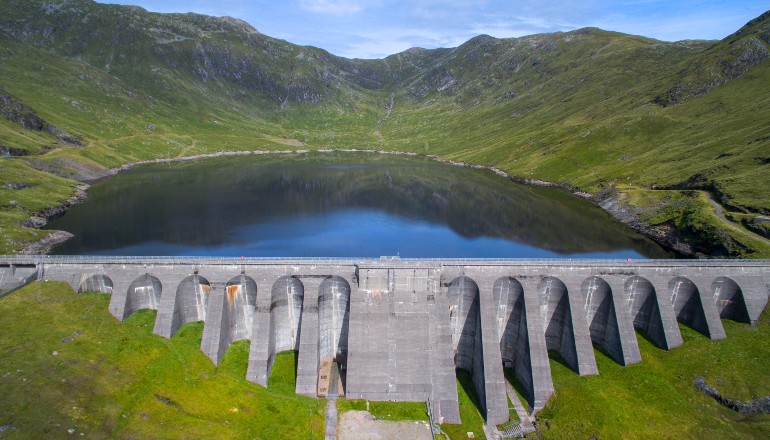
Plans to unlock billions of pounds of investment in long duration energy storage (LDES) projects in the UK have taken a crucial step forward.
Following a consultation period on a planned ‘cap and floor’ scheme for LDES, Ofgem and the Department for Energy Security and Net Zero (DESNZ) have now released a joint technical document outlining the regime in more detail.
LDES technologies work like giant batteries by storing renewable energy and releasing it onto the grid and into homes when needed.
However, there have been no new LDES projects for four decades, due to barriers such as high upfront costs holding back potential investment.
The technical document, which was completed based on feedback and consultation responses, confirms key final details of the cap and floor scheme.
It sets out how it will operate, application window timelines, eligibility criteria and the potential LDES capacity needed, among other technical details.
Commenting on the document, RenewableUK’s senior policy analyst Yonna Vitanova said: “The introduction of a cap and floor mechanism for LDES is a critical means of catalysing investment in an underdeveloped area and supporting the UK’s ambitions for a clean power system by 2030.
“No new LDES technology has reached commercial deployment in the UK in the last 40 years, so today’s confirmation of the design of the cap and floor scheme brings welcome clarity to industry and investors alike.
“The indicative capacity range of between 2.7 and 7.7GW up to 2035 is a welcome ambition, whilst the accelerated timeline to award projects with a 25-year cap and floor regime in Q2 2026 brings much needed certainty.
“The LDES cap and floor approach acknowledges the unique risks LDES projects are exposed to when compared to interconnectors, and lays out the building blocks to unlock much-needed deployment of electricity storage over the next decade.”
The cap and floor scheme will ensure investors receive a minimum amount of revenue to enable investment in LDES assets.
Alongside this, the cap on revenue provides returns to consumers for their support, where LDES assets operate above the cap.
The cap will be set to allow recovery of invested capital (debt and equity) and to provide a fair return on investment if the assets perform well in the market.
Meanwhile, the floor will be set to allow recovery of invested capital along with a rate of return that is comparable to the cost of debt.
The government and Ofgem believe this sets the right balance of incentivising investment and encouraging appropriate operation of LDES assets, while avoiding unnecessary risk to consumers.
An additional application guidance and eligibility assessment framework document will be published by Ofgem when the scheme opens this spring.