


Wind energy will need to increase by nine times from today’s installed capacity to supply clean electricity demand to meet global climate and sustainability goals by 2050, according to a new report from Equinor.
Equinor’s 10th ‘Energy Perspectives’ report describes how the world can reach climate and sustainability goals by a more “equitable distribution” of economic growth and contributions from developed countries to climate actions and development in emerging markets.
Through the “Reform”, “Rivalry” and “Rebalance” scenarios the report describes possible outcomes for the development of the world economy, the global energy mix, energy demand and greenhouse gas emissions towards 2050.
“Rebalance” is a new scenario in this year’s report, describing how the world can still reach the goals of the Paris Agreement and limit global warming to well below two degrees Celsius.
This would entail an 80% increase in electricity demand to decarbonise sectors like transportation which must be met by a nine-fold increase in installed wind power capacity to ensure electricity supplies are clean.
“Rebalance” shows a development path towards 2050 where economic growth accelerates in emerging markets, while the growth is lower in developed economies.
It forecasts that global energy-related CO2 emissions will never return to the level they were before the Covid-19 pandemic and that absolute global energy demand is reduced by 15% compared to 2019.
It also found that even if the oil demand peak was passed in 2019, there will still be a need for oil and gas in the energy mix.
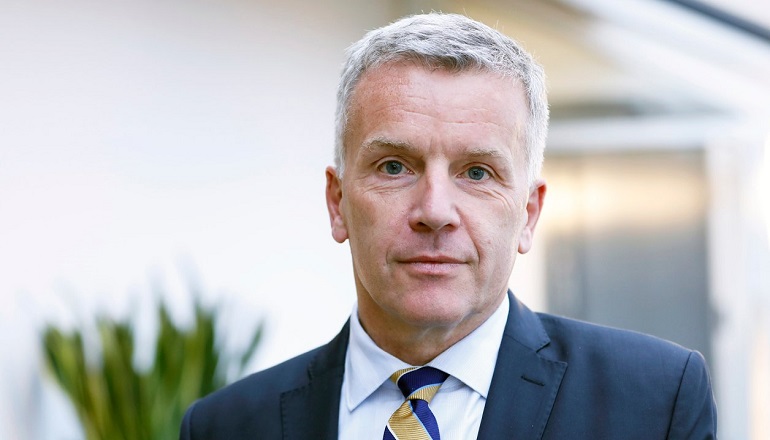
Equinor chief economist Eirik Waerness (pictured) said: “2020 has been an extraordinary year.
“The impacts of Covid-19 have led to a considerable decline in energy demand, energy prices and global greenhouse gas emissions.
“The energy transition is progressing too slowly, and effective actions are required urgently to reach the climate goals.
“To reach the climate goals, we must establish a new balance in the priorities between economic growth, increased welfare and climate actions.
“A more equitable global distribution of welfare increase, acknowledging that a cost distribution is required between developed and emerging markets to support the energy transition, describes a more credible path to reaching the climate goals and the UN’s sustainability goal.”
In the “Rebalance” scenario the premise of continued high global economic growth across all regions has been changed.
Waerness said: “We do not know for certain how the development will be after the pandemic. It is precisely in times of much uncertainty that scenario planning is more important than ever.
“The outcome space is big, and the choices made in the next years will be vital for how the world is developing to a sufficient extent in a more sustainable direction.”
The “Reform” scenario is based on a market and technology driven development.
There will be continued tightening of climate policies in line with the commitments of the Paris Agreement, however, it will not be enough to reach the climate goals.
Developed countries are the main drivers of the development, and there is limited success for zero-emission technology, such as carbon capture and storage, and new energy carriers, such as hydrogen.
In the “Rivalry” scenario Equinor has assumed that climate policy is not sufficiently prioritised and consequently the energy transition is not gaining enough momentum.
The report stated: “There are several indications of the development heading in this direction.
“Trade wars, social and political unrest and regional political conflicts with potential for further escalation are examples of that.
“In Rivalry these trends continue, leading to protectionism, autocracy, less global cooperation, slower technology development and weak economic growth.”