


Solar power growth will lead the expansion of renewables in the next 10 years, according to the International Energy Agency’s World Energy Outlook 2020.
In the report’s “stated policies scenario”, which reflects current announced policy intentions and targets, clean power is set to meet 80% of global electricity demand growth over the next decade.
Hydropower remains the largest renewable source, but solar is the main source of growth, followed by onshore and offshore wind.
This will be driven by supportive policies and maturing technologies enabling very cheap access to capital in leading markets, the report states.
It found that solar is now consistently cheaper than new coal- or gas-fired power plants in most countries, and solar projects now offer some of the lowest cost electricity ever seen.
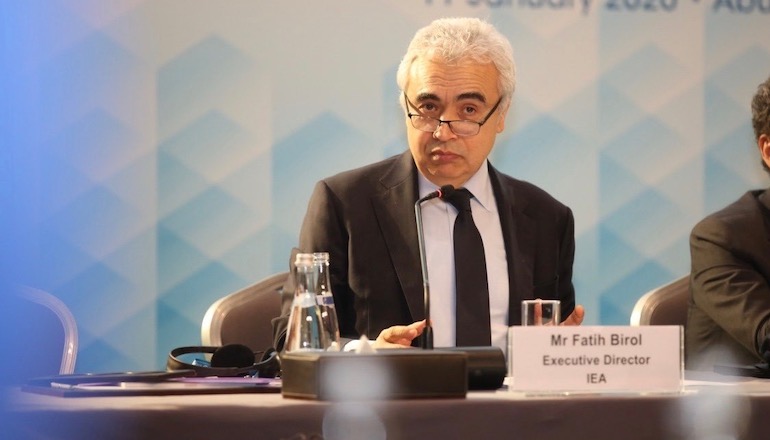
IEA executive director Fatih Birol (pictured) said: “I see solar becoming the new king of the world’s electricity markets. Based on today’s policy settings, it is on track to set new records for deployment every year after 2022.
“If governments and investors step up their clean energy efforts in line with our Sustainable Development Scenario, the growth of both solar and wind would be even more spectacular – and hugely encouraging for overcoming the world’s climate challenge.”
The Sustainable Development Scenario demonstrate how to put the world on track to achieving sustainable energy objectives in full.
This would be through the complete implementation of the IEA Sustainable Recovery Plan that moves the global energy economy onto a different post-crisis path.
The IEA sees the combined share of solar and wind rising from 8% in 2019 to almost 30% in 2030 in this scenario.
Wind additions will increase by 140% in this scenario. However, the report states that the strong growth of renewables needs to be paired with robust investment in electricity grids.
Without enough investment, grids will prove to be a weak link in the transformation of the power sector, with implications for the reliability and security of electricity supply, according to the findings.