


Solar, wind and battery storage are forecast to provide almost all net new US generating capacity in 2026, according to a review by the SUN DAY Campaign of newly released data from the US Energy Information Administration.
The group said EIA figures show solar remained the fastest-growing source of US electricity through November 2025.
It added that utility-scale solar generation in November rose by 33.9% year-on-year while small-scale systems increased by 11.0%.
Combined solar output in November grew by 27.5% and supplied 7.2% of US electricity.
During the first 11 months of 2025, utility-scale solar expanded by 34.5% and small-scale by 11.3%, increasing their combined share to just under 9.0%.
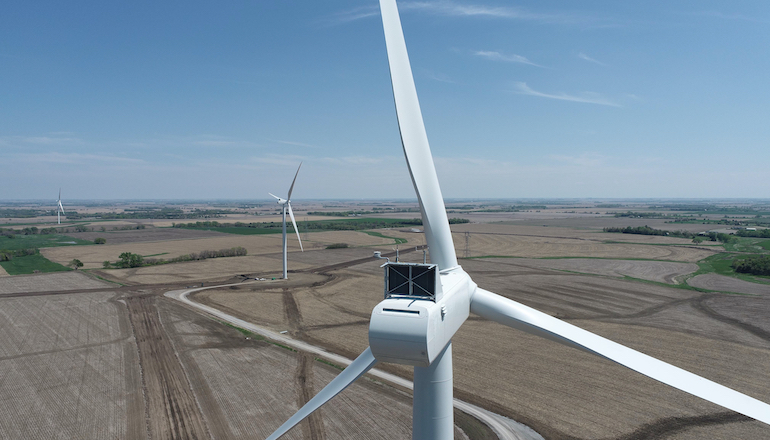
Wind provided 10.1% of US generation in the same period, reflecting 1.2% annual growth.
Wind output in November alone was 2.0% higher than a year earlier.
Together, wind and solar supplied 19.0% of US electricity in the first 11 months of 2025, up from 17.3% in 2024.
The SUN DAY Campaign stated that the pair generated 16.9% more electricity than coal and 10.1% more than nuclear power during the period.
Total renewable generation, including hydropower, biomass and geothermal, increased by 8.7% year-on-year to 25.7% of US output.
The group noted that natural gas generation fell by 3.7% in the same timeframe.
From January to November 2025, utility-scale solar capacity rose by 22,237.2MW alongside 5460.5MW of small-scale additions.
Battery storage expanded by 49.4% during the year and added 13,357.0MW.
Wind capacity grew by 4234.2MW, while natural gas added 4152.2MW and nuclear increased by 46.0MW.
Coal capacity fell by 4141.1MW and petroleum-based plant by 514.1MW.
The SUN DAY Campaign said renewable energy capacity, including battery storage, hydropower, geothermal, biomass and small-scale solar, grew by 45,198.1MW during the period.
It stated that fossil fuel and nuclear capacity combined declined by 519.2MW.
EIA forecasts 69,579.1MW of new utility-scale renewables and battery storage over the next 12 months.
The SUN DAY Campaign estimated that small-scale solar could add a further 6000MW or more.
EIA projects natural gas capacity to rise by 3960.7MW, almost offset by a 3387.0MW decline in coal.
Petroleum and “other gases” are expected to decrease by 10.4MW and nuclear shows no growth.
The group said renewables and storage will therefore account for 99.2% of net new capacity in 2026.
It added that renewable capacity including small-scale solar could reach 508,699.7MW by November 2026, approaching natural gas at 514,484.1MW.
Solar capacity would total 247,534.5MW, exceeding wind at 167,102.7MW, coal at 166,649.5MW and more than doubling nuclear at 98,437.2MW.
“For more than a year now, members of the Trump Administration have sought to stop the growth of wind and solar … and have failed,” said SUN DAY Campaign executive director Ken Bossong.
“Perhaps it is time for them to finally recognize renewable energy’s unstoppable growth and either get with the program or else just get out of the way.”