


Two consortia have secured just under £1m from Wave Energy Scotland to explore the use of concrete and floating net buoys to bring down wave power costs.
The teams – one led by consultant engineers Arup and the other by rope and mooring specialists Tension Technology International – have each secured funding from Wave Energy Scotland (WES) to demonstrate the potential of new applications of materials to bring down the cost of wave power.
The Arup consortium aims to show that pre-cast reinforced concrete can be incorporated in a variety of wave technologies.
Tension Technology International will advance the design of their flexible buoyant pod which is encapsulated in a fibre rope net.
Commenting on the awards, Tim Hurst, managing director of WES said “Our goal is to deliver technologies that can produce power reliably and can demonstrate a route to commercial readiness.
“These two projects use materials that have a long history of use in the marine environment but so far have not been considered for wave energy machines. We believe both have real potential”.
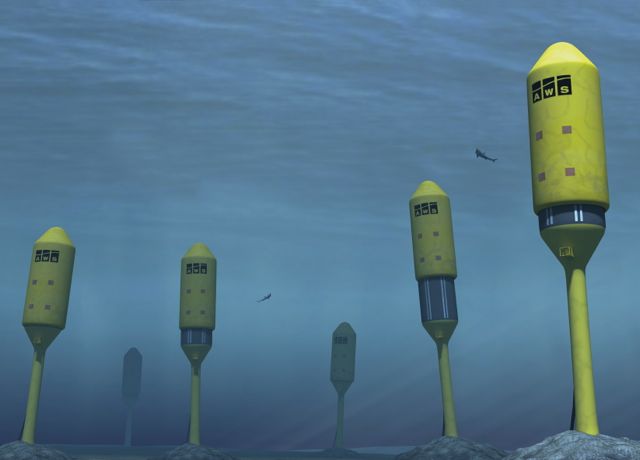
The Arup team is already working with Inverness-based wave energy technology developer AWS Ocean Energy to investigate the use of the technology in the AWS Archimedes Waveswing. This submerged buoy is itself a recipient of WES funding through the novel wave energy convertor programme.
The teams aim to demonstrate the survivability of their concepts and their application in a range of wave energy devices. They will also work with supply chain partners to advance the commercialisation of their technologies and will provide open source design tools that can be used by wave energy developers in the design of their devices.
Ben Yeats, project manager at Tension Technology International said, “TTI is excited to be awarded this stage 3 contract to further develop our innovative inflatable Netbuoy technology. Stage 3, which will include Scottish coastal field trials, will enable TTI to advance the Netbuoy’s technical and commercial readiness while exploring new markets.”
George Walker, associate in advanced digital engineering at Arup said, “We are excited to work with WES to further develop our concrete wave energy convertor design and improve the commercial case for the sector.
“The previous stage included successful full-scale testing of an innovative precast connection to enable serial production of concrete wave energy devices. The next stage comprises integrating the material into the Archimedes Waveswing device to bring down cost, and development of a digital design tool to enable concrete to be exploited in the sector more widely.”
This is the latest stage gate funding process in the WES programme, a subsidiary of Highlands and Islands Enterprise, which is fully funded by the Scottish Government. This month, Holyrood have confirmed that they will provide a further £8.2 million of funding for the WES programme in the 2020/21 budget.