


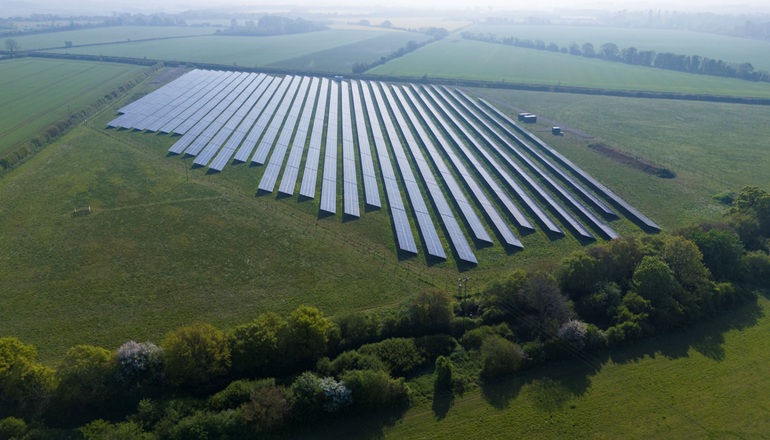
Blenheim Estate in the UK has completed work on its 20-acre Weaveley solar park, which sees the UNESCO World Heritage Site become a net generator of green energy.
The 7MW Weaveley solar park, which will have at least a 30-year lifespan, is the first field scale project to have been built by Blenheim Estate as part of its commitments to become Net Zero by 2027.
The site will not only generate clean green energy; it will provide sheep grazing throughout the year, and through existing partnerships begin welcoming school visits as part of pupils’ STEM curriculum.
This year also marks the tenth anniversary of the Blenheim Estate’s hydropower scheme on the River Glyme.
Roy Cox, Managing Director – Estates, said: “The Weaveley solar project has been a fantastic learning process which we can apply to larger infrastructure projects in the future.
“We will be sharing data and all of the learnings, good and bad, as the site matures.
“It’s also been a real team effort, not only from our own sector experts in innovation and natural capital playing key roles, but through working closely with our partners, who have built the scheme.
“This land previously had zero biodiversity and was exhausted from years of intensive farming, but we’re already seeing an uplift in the site’s biodiversity, thanks to a number of measures including the flower and nectar rich mixes already sown, wild bee habitats and thriving hedges for food and shelter.”
He added: “These uplifts are being measured through a pioneering sensor network to measure thermal efficiency, monitor and understand ecosystems and through open source live data show how these are performing as the field regenerates itself.”