


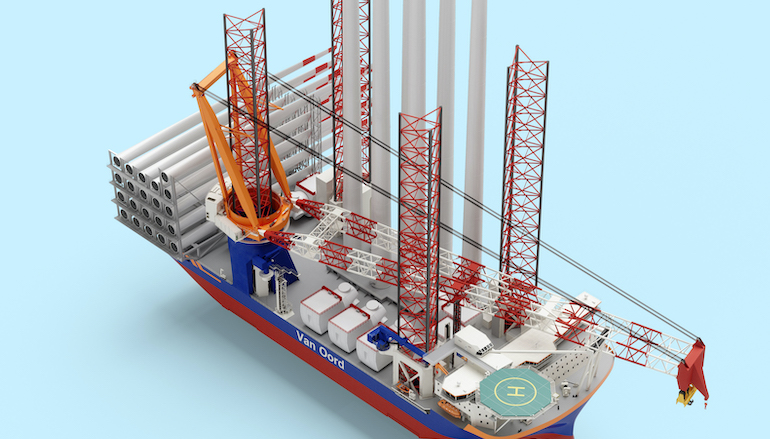
ABB has secured a contract with Yantai CIMC Raffles Shipyard in China to supply an integrated power, automation and propulsion system for a new build jack up vessel (JUV) Boreas.
Azipod propulsion is a gearless steerable propulsion system where the electric drive motor is housed within a pod outside the ship hull.
Azipod units can rotate 360 degrees, increasing maneuverability and operating efficiency of vessel, while cutting fuel consumption by up to 20% compared to conventional shaftline systems, according to ABB.
The vessel is due for delivery to Van Oord in the second part of 2024.
Boreas will be one of the largest and most technologically advanced hybridized JUVs in operation, measuring 175 metres in length, according to ABB.
It will be able to lift over 3,000 tonnes and will feature 126-metre-tall legs allowing it to operate at depths of up to 70 metres jacked up, with a capacity to install up to 20MW offshore wind turbines, the company added.
Van Oord project director Harold Linssen said: “Projects involving dynamically positioned vessels, especially JUVs, call for a systems supplier with specialist experience and expertise as well as a proven portfolio of integrated power and propulsion solutions.
“Having collaborated with ABB in the past, we know that not only does ABB meet all of these requirements; they also offer global support during the project and throughout the lifecycle of the vessel.
“We are looking forward to collaborating with ABB on this project to shape the future of offshore wind farm installation.” Shiyan Sun, director for the supply chain management centre at Yantai CIMC Raffles Shipyard, added: “ABB is our long-term parter and I believe we can enhance the business relationship with ABB by working together for VAN Oord Jack Up Vessel.
“The ease of installing the Azipod system was another key factor in our decision to contract ABB; it is a matter of plugging the ready-made units into the vessel hull, saving considerable time and effort in the construction process.” Boreas will be equipped with four Azipod propulsion units with a combined propulsion power of 16MW, offering significant space and weight savings as well as facilitating optimal ship design, allowing the vessel to transport heavier loads, ABB said.
In addition, ABB’s hybrid-electric propulsion system is fully future-proof as it allows integration of new energy sources once they become available, it added.