


Asia Pacific’s decarbonisation bill could be over $3 trillion by 2040, according to new research by Wood Mackenzie, which totals investments in solar, wind, hydro and nuclear power, as well as green hydrogen production.
Under Wood Mackenzie’s accelerated transition scenario, most of the region’s zero carbon expenditure will be in the power and transport sectors, as both accounted for over 50% of the region’s carbon emissions in 2018.
This significant shift requires investment and support from all stakeholders especially China and India, stated the analyst outfit.
Speaking at the inaugural Wood Mackenzie Energy and Commodity Summit Singapore, Asia Pacific markets and transitions head Prakash Sharma said: “In our base case, we forecast the share of zero-carbon energy increasing from 8% in 2018 to 17% in 2040.
“In our accelerated transition scenario case for Asia Pacific, we forecast the share of zero-carbon energy reaching 35% by 2040 with green hydrogen capturing up to 3% in the mix.
“In the mobility sector, the share of electric vehicles increases up to 65% of new sales by 2040 in the scenario case compared to an average 25% in the base case.”
Energy demand in the region is expected to grow 15% from 2019 to 6800 million tons of oil equivalent in 2040. Currently, net fossil fuel imports account for 25% of the region’s demand.
Despite ambitious government targets, national oil and gas companies have been struggling to ramp up oil and gas production, stated Wood Mackenzie.
Wood Mackenzie Asia Pacific vice chair Gavin Thompson said: “The situation is set to change as the region grapples with severe air pollution and the demands of energy transition. The question is how can Asia Pacific ensure stable energy supply growth and yet be on track on the decarbonisation bill?”
“Go electric” is an ‘emerging theme’ across Asia and electricity is increasingly set to come from solar and wind, according to the analyst company, which means less direct combustion of fossil fuels and improving energy security and lowering carbon emissions as a result.
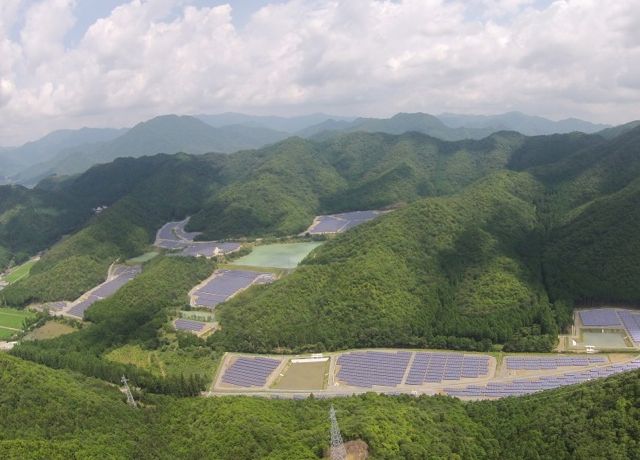
The region currently has 540GW of installed capacity for solar and wind and is expected to add 1528GW over the next two decades.
According to Wood Mackenzie these forecasts ensure Asia Pacific will be the largest market for new solar and wind installations globally in 20 years’ time, driven by rapidly growing power demand and a “strong desire” to decarbonise the energy mix and control air pollution.
Wood Mackenzie expects the levelised cost of solar, wind and storage projects to decline more than 3% annually over the next decade thereby further improving competitiveness of renewables compared to the conventional technologies.
Sharma added: “What’s interesting is that renewables can now be used outside the power sector as well. Electrolyser technology is improving to produce green hydrogen using electricity powered by renewables.
“Green hydrogen is a clean energy carrier and can decarbonise ‘difficult sectors’ such as steel, cement, chemicals, heating and heavy-duty trucking. It can also tackle the intermittency of renewables by diverting excess supply during the day to produce hydrogen that can be stored for use in the evening when demand is high.”
Although the current cost of green hydrogen is higher than conventional sources, Wood Makenzie’s recent analysis shows costs could reach parity by 2030 in Australia, Germany and Japan based on $30 per megawatt-hour for renewables.
Globally, Wood Mackenzie estimates $365m has been invested in the sector and over $3.5bn-worth projects are in the pipeline for commissioning by 2025.