


Europe needs to better link electricity and hydrogen, and find new models to enable private capital to invest in the needed energy infrastructure buildout, according to a new report from Elia Group, Copenhagen Infrastructure Partners (CIP) and German gas TSO Gascade.
Launched at the WindEurope conference in Copenhagen, the three companies are outlining in steps to establish a competitive, resilient and clean energy system in Europe by 2050.
The Green Electricity and Hydrogen for a competitive, resilient and clean European Energy System paper highlights the need to expand renewable energy, electricity grids, and hydrogen infrastructure, while enhancing synergies between the electricity and hydrogen sectors.
Additionally, the paper emphasizes the need for private capital as a key source for funding of the needed infrastructure buildout.
The close cooperation between these three leading European energy infrastructure companies is mirrored in a joint message: the electricity and hydrogen sectors should be more tightly developed and linked, ultimately leading to economic and efficiency gains.
To ensure Europe’s energy self-sufficiency and transition to a new and more cost-efficient energy generation, renewable electricity generation must increase significantly by 2050.
All of this new generation will also require investments in connected transmission systems.
While electrifying final energy demand is crucial, it must be supplemented with green hydrogen.
Done the right way it will support a cost-efficent transmission infrastructure and bring the needed flexiblity to the electricity grid, which will key to enable a fully decarbonised and renewable energy system.
The paper emphasizes the importance of coupling renewable energy sources with hydrogen production in regions with surplus renewable energy.
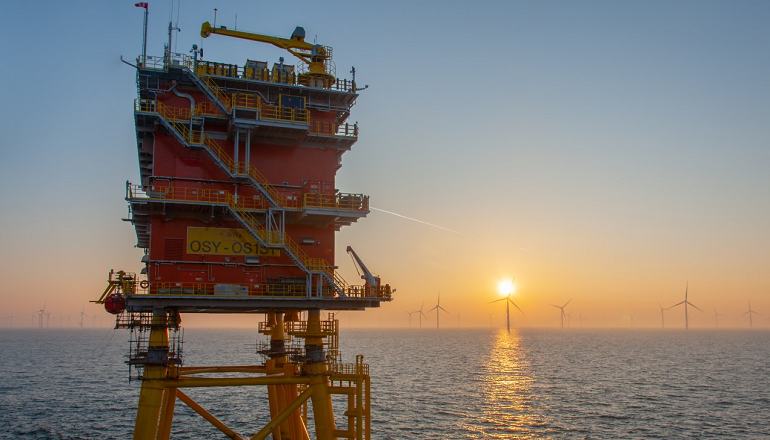
An example is co-location of offshore wind generation with offshore hydrogen production to enable a more cost-competitive alternative to onshore production.
Flexible operation of electrolysers matching fluctuating electricity prices and regional renewable generation will result in more cost-competitive hydrogen production and higher utilisation of renewable assets.
To achieve these goals, mobilising private investment for renewable energy and infrastructure is needed, according the the report.
Enabling private capital requires sufficient regulation and strong partnership models.
The paper calls for implementing regulatory frameworks that promote flexible electrolyser operation and aligning planning processes for electricity grids and hydrogen infrastructure at European, national, and sea basin levels.
A number of concrete suggestions are outlined to provide a roadmap for a sustainable energy future in Europe, emphasising innovative design and operation of the energy system to unlock the full potential of renewable energy and hydrogen.
Stefan Kapferer, chief executive of 50Hertz and member of the Elia Group Steering Committee, said: “In future we need more private capital for the expansion of renewable energies and transport infrastructures, a flexible regulatory framework so that hydrogen production by electrolysers can be carried out in a way that is beneficial to the system and the grid and we need to align the planning processes for electricity and hydrogen networks at all levels – on European level, on national level, and also for the respective sea areas in Europe, primarily for the North Sea and Baltic Sea.”
Christoph von dem Bussche, chief executive of Gascade, added: ‘Electrons and molecules complement each other and will be crucial for an optimized energy system.
“To achieve this a close alignment for the expansion of electricity and hydrogen grids is needed, on- and offshore.
“With the new association ENNOH we create the necessary framework for the development of an efficient hydrogen transport infrastructure at European level and strengthen the cooperation with the electricity side.”
Thomas Dalsgaard, partner at Copenhagen Infrastructure Partners, said: “Europe will need roughly EUR 200 bn annual investments in the energy system in order to lower the cost of energy to consumers, ensuring energy independence, and at the same time decarbonising.
“The scale of required investments is too large to be financed by TSOs and public entities alone.
“However, there is plenty of private capital available for in- vestment in energy infrastructure – provided the right conditions exist.
“New financing models that include a fair cost and risk allocation are needed.
“What is new is the need for private investors and TSOs to work closer together, which is why I really appreciate our exchange and cooperation with Elia Group and Gascade.”