


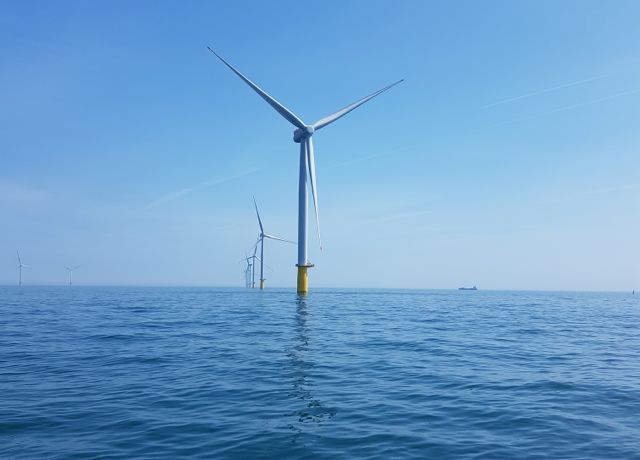
The share of North Sea offshore electricity in Germany’s total wind power generation increased by 13% in 2025 compared with the previous year, according to TenneT Germany.
In 2025, TenneT Germany transmitted approximately 20.8 terawatt-hours (TWh) of wind energy from the German North Sea to the mainland. The maximum feed-in power of offshore wind farms reached 6.543 GW on 30 December 2025.
TenneT Germany’s offshore transmission capacity stood at 9.832 GW in 2025. The installed capacity of offshore wind farms in the German North Sea reached 7.905 GW as of 31 December 2025, up from 7.387 GW in 2024.
Total offshore wind power generation in Germany amounted to 26.1 TWh in 2025, including 20.8 TWh from the North Sea (TenneT Germany grid area) and 5.38 TWh from the Baltic Sea (50Hertz grid area). Combined with 106.5 TWh generated by onshore wind, Germany’s total wind power generation reached 132.6 TWh.
“Europe now has the opportunity to unlock the full potential of the North Sea as a green power plant. This potential represents the most important building block for a secure, independent and energy-resilient Europe. To achieve this, the North Sea coastal states have embarked on planning and implementing an interconnected, cross-border offshore energy system,” said Tim Meyerjürgens, CEO of TenneT Germany. “At TenneT Germany, we have been driving this development forward for years and stand ready to help deliver the North Sea power plant project.”